
Start your day with a gentle, mindful 10-minute balance routine by focusing on breath, grounding, and gentle stretches. Incorporate standing poses like tree pose and heel-to-toe walk to build stability, then engage your core with controlled exercises like plank taps and twists. Finish with relaxing stretches and deep breathing to relax your mind and body. Continuing this sequence will help you cultivate balance, calmness, and focus for the day ahead.
Key Takeaways
- Incorporate gentle warm-up, breathing, and visualization to set a calm, focused mindset for balance.
- Practice standing leg lifts, tree pose, and single-leg balancing to strengthen stability and proprioception.
- Engage core with exercises like plank with shoulder taps, seated twists, and gentle side bends for spinal support.
- Use slow, controlled movements such as cat-cow stretches and heel-to-toe walks to enhance mobility and posture.
- Finish with deep breathing and relaxation to promote calmness, mindfulness, and overall balance for the day.
Warm-Up and Breathing Exercises
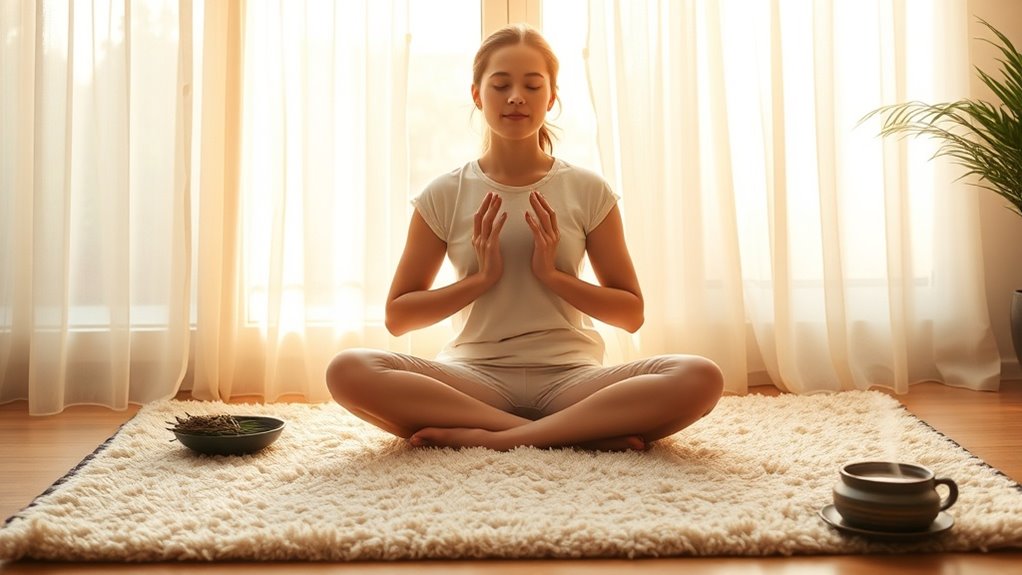
Starting your morning with gentle warm-up and breathing exercises helps set a calm, focused tone for the day. Begin by finding a comfortable seated or standing position, closing your eyes if you wish. Take slow, deep breaths, inhaling through your nose and exhaling gently through your mouth. Focus on your breath, letting each inhale and exhale anchor you in the present moment. Incorporate a simple meditation practice by silently repeating positive morning affirmations, such as “I am grounded” or “I am ready for today.” These affirmations reinforce a mindful mindset and promote inner calm. As you breathe, pay attention to the sensations in your body, releasing tension with each exhale. This mindful warm-up primes your mind and body, creating a peaceful foundation for your routine. Keeping your focus on your breath and affirmations cultivates clarity and serenity that can carry through your entire day.
Standing Leg Lifts
Standing leg lifts are a gentle way to strengthen your lower body while maintaining balance and focus. As you lift one leg, keep your core engaged and your standing leg steady. This movement encourages hip flexibility, allowing your hips to open gradually as you lift and lower your leg smoothly. Focus on a slow, controlled motion, feeling your muscles activate without strain. Pay attention to ankle stability—your ankle should support your movement with a firm, grounded feel. Keep your toes pointed forward or slightly outward, depending on what feels most natural. Breathe evenly as you lift, hold, and lower your leg, cultivating mindfulness with each repetition. This simple practice helps improve coordination, enhances muscle control, and fosters a calm, centered awareness of your posture. Incorporate standing leg lifts into your routine for a balanced start to your day, strengthening your lower body while promoting mindful movement.
Tree Pose for Stability
As you settle into Tree Pose, focus on engaging your core gently to support your balance. This helps you feel steadier and more centered, both physically and mentally. With each breath, find a sense of calm and clarity that carries you through your morning routine.
Strengthening Core Engagement
While practicing the Tree Pose, you can deepen your core engagement by focusing on the subtle muscles that support your spine and stabilize your balance. Engage in gentle core activation by drawing your belly button softly inward, activating your deep abdominal muscles. This stability training helps create a solid foundation, allowing you to maintain your pose with ease. As you settle into the posture, feel your pelvis align and your standing leg root firmly into the ground. Keep your breath steady, allowing your core muscles to support each movement. By consciously strengthening your core during this pose, you enhance overall stability and cultivate a mindful sense of balance that flows beyond your yoga practice.
Finding Focus and Calm
Focusing your mind is just as important as engaging your muscles when practicing the Tree Pose. It helps cultivate a sense of calm and stability, grounding you for the day ahead. To find that focus, try a simple morning mindfulness practice before or during your pose. Breathe slowly, feeling each inhale and exhale. Visualize roots growing from your foot into the earth, anchoring you. You might also silently repeat a calming mantra or affirmation.
During your Tree Pose, keep your gaze soft and steady. Remember, mindfulness meditation isn’t about perfection, but presence. Incorporate these tips:
- Focus on your breath
- Visualize grounding roots
- Use a calming mantra
- Stay present with each moment
Heel-to-Toe Walk
As you begin the heel-to-toe walk, focus on placing each heel directly in front of the toes to keep your steps steady. Move slowly, ensuring your toes gently shift from heel to ball of the foot with control. Throughout, maintain your posture upright and centered to support your balance.
Proper Heel Placement
Proper heel placement is essential for maintaining balance and stability during your heel-to-toe walk. Focus on aligning your foot correctly to ensure smooth movement and prevent wobbling. Pay attention to how your heel hits the ground first, then gently roll through to your toes. Keep your heel placement deliberate, so your foot lands heel-first, with your foot aligned in a straight line. To help you stay centered, remember these tips:
- Visualize a straight line from heel to toe
- Keep your toes relaxed and pointing forward
- Place your heel directly in front of the opposite foot’s toes
- Maintain a steady, controlled pace
Controlled Toe Transition
To master a smooth heel-to-toe walk, you need to control your progression from your heel to your toes with intention and mindfulness. Focus on engaging your toe grip gently as you shift weight forward, feeling each part of your foot connect with the ground. Pay attention to your foot flexibility, allowing your arches to move naturally without forcing them. Move slowly and deliberately, noticing the subtle passage from heel strike to toe push-off. Keep your movements centered and steady, avoiding rushing or overextending. This mindful control helps improve balance and stability, fostering a calm awareness of your body’s natural rhythm. With practice, your toe grip and foot flexibility will become more coordinated, making each step smoother and more balanced.
Maintain Postural Alignment
Once you’ve gained control over your toe grip and foot flexibility, focus on maintaining your postural alignment as you walk heel to toe. Keep your head aligned with your spine, shoulders relaxed, and core engaged to support spinal health. Mindful posture correction helps prevent strain and promotes balance. As you walk:
- Maintain a steady gaze forward, avoiding looking down.
- Keep your pelvis level and upright.
- Distribute your weight evenly from heel to toe.
- Breathe smoothly, staying relaxed through your movements.
This gentle practice encourages awareness of your body, fostering stability and spinal health. Pay attention to how your body feels, adjusting as needed. With consistent mindfulness, you’ll reinforce good posture and improve overall balance, creating a calming start to your day.
Plank With Shoulder Taps
While it might feel challenging at first, incorporating plank with shoulder taps into your morning routine can help strengthen your core and improve stability. This gentle movement encourages mindful engagement of your shoulder stability and core strength, fostering balance and control. To begin, assume a high plank position, keeping your body in a straight line. Tap your right shoulder with your left hand, then return to plank, and repeat on the opposite side.
| Step | Focus |
|---|---|
| Maintain alignment | Keep hips steady, avoid sway |
| Controlled taps | Move slowly, breathe evenly |
| Engage core | Tighten abdominal muscles |
Performing this exercise with calm awareness nurtures your stability and cultivates mindful movement. Over time, you’ll notice increased strength and balance, setting a peaceful tone for your day.
Seated Torso Twists
Seated torso twists offer a gentle way to enhance spinal mobility and engage your core without requiring much space or equipment. Sit comfortably on a chair or cushion, keeping your back straight. Place your hands behind your head or crossed over your chest. As you breathe in, lengthen your spine; as you breathe out, gently twist your torso to one side. Hold briefly, then return to center before twisting to the other side. This movement encourages mindful breathing and promotes flexibility in your spine.
Seated torso twists gently improve spinal flexibility and engage your core mindfully.
Consider these tips to deepen your practice:
- Keep your hips stable and avoid leaning forward or backward
- Move slowly and with control, focusing on your breath
- Feel the stretch along your spine and obliques
- Repeat for 5-10 twists, maintaining a calm, steady rhythm
Seated torso twists are a calming way to nurture spinal mobility and start your day mindfully.
Gentle Side Bends
As you begin gentle side bends, focus on maintaining proper posture to support your spine. Breathe smoothly and evenly to enhance relaxation and movement. This mindful approach helps you connect your breath with your body, promoting balance and calm.
Proper Posture Alignment
Have you ever noticed how gentle side bends can improve your posture and set a calm tone for the day? These simple movements support posture correction and spinal health by gently stretching your sides and aligning your spine. To do this mindfully:
- Stand tall with feet hip-width apart
- Inhale deeply, reaching one arm overhead
- Exhale as you gently bend sideways, feeling the stretch
- Hold briefly, then switch sides
Focus on maintaining relaxed shoulders and a steady breath. Keep your movements smooth and controlled to avoid strain. This practice encourages awareness of your alignment, helping to prevent tension and promote a balanced posture. Incorporating these gentle side bends into your morning routine nurtures your spine’s health and fosters a calm, centered mindset for the day ahead.
Smooth Breathing Technique
Practicing smooth, even breathing during your side bends can deepen your sense of calm and enhance your movement awareness. Focus on inhaling slowly through your nose, filling your lungs evenly, then exhaling gently. This mindful breathing aligns with meditation techniques that promote presence and relaxation. As you bend gently to each side, maintain this steady breath, allowing it to anchor your movements. Incorporate nutritional tips by staying hydrated and choosing light, nourishing foods that support your energy and focus. Keep your mind present, observing each breath and movement without judgment. This simple practice cultivates a peaceful mindset, helping you start your day with clarity and balance. With consistent effort, your breath becomes a calming rhythm that supports both your physical and mental well-being.
Balancing on One Foot With Eyes Closed
Balancing on one foot with your eyes closed is a gentle way to deepen your focus and improve your stability. This practice challenges your balance and sharpens your proprioception through eye closure techniques, helping you become more aware of subtle shifts in your body. As you stand quietly, feel the ground beneath you and notice any wobbling or adjustments needed.
To make this easier:
- Start near a wall or sturdy surface for support if needed
- Focus on slow, steady breathing to stay relaxed
- Keep your shoulders relaxed and your gaze softly closed
- Shift your weight gently as you find your center
Cat-Cow Stretch for Spinal Alignment
The Cat-Cow stretch is a gentle movement that helps realign your spine and ease tension in your back. Begin on your hands and knees, with your wrists aligned under your shoulders and knees under your hips. As you inhale, gently lift your head and tailbone, arching your back into the Cow position. Feel your chest open and your spine lengthen, enhancing your spinal flexibility. Exhale slowly, rounding your back towards the ceiling, tucking your chin towards your chest, and engaging your core. Repeat this flow, moving smoothly between Cat and Cow, focusing on your breath and the sensations in your spine. This mindful practice encourages gentle mobility and relieves stiffness, creating a calming start to your day. With each movement, you cultivate awareness of your spine’s natural curves, promoting better posture and reducing back tension throughout your morning routine.
Cool-Down and Deep Breathing

To gently conclude your morning routine, focus on cool-down and deep breathing to help your body shift into the day with calm and clarity. This moment allows you to practice mindful meditation, grounding yourself and promoting stress relief. Find a comfortable seated position, close your eyes, and take slow, deep breaths. Inhale deeply through your nose, feeling your belly expand, then exhale fully through your mouth.
Ease into your day with calming breaths and mindful grounding.
To deepen your relaxation, consider these practices:
- Focus solely on your breathing, noticing each inhale and exhale
- Use a calming mantra or affirmation to center your mind
- Visualize a peaceful place, allowing your mind to settle
- Gently stretch your neck and shoulders to release tension
These simple steps help you transition smoothly, leaving you refreshed, focused, and ready to face the day with a mindful, balanced mindset.
Common Questions
Can Beginners Easily Perform These Balance Exercises?
Yes, beginners can easily perform these beginner-friendly exercises, as they are designed to gently build your balance skills. You won’t need advanced balance techniques right away, just patience and mindful practice. Focus on slow, controlled movements, listen to your body, and stay calm. With consistent effort, you’ll notice steady improvement, helping you feel more stable and confident each day. Remember, gentleness and persistence are key.
How Long Should Each Routine Session Last?
For each balance routine session, aim for about 10 to 15 minutes, following gentle duration guidelines that suit your comfort level. Start with shorter sessions and gradually increase as you build strength and confidence. Keep your session timing mindful and calming, focusing on your breath and steady movements. Remember, consistency is key, so listen to your body and enjoy the peaceful start to your day.
Are Modifications Available for Limited Mobility Individuals?
Absolutely, modifications can be your gentle guiding star. For limited mobility individuals, adaptive equipment and seated modifications serve as your sturdy bridge, making balance exercises approachable and safe. Imagine your routine as a calming stream—adjusting the flow with supportive tools guarantees you stay steady and centered. Take your time, listen to your body, and remember, every small step is a meaningful stride toward balance and well-being.
What Equipment or Space Is Needed for the Routine?
You’ll need minimal space, roughly a small corner or clear area, to comfortably perform the routine. Balance equipment like a sturdy chair, a balance pad, or a small stability ball can enhance your practice. Make sure your space is free of clutter, providing a calm environment. Focus on slow, mindful movements, and use the equipment to support your balance, helping you feel centered and grounded during your routine.
How Often Should I Perform This Routine for Best Results?
Think of your routine as tending a delicate garden; consistent care helps it flourish. To find the most suitable balance, aim for frequency recommendations of daily or every other day, allowing your body to adapt and strengthen. The ideal timing is right after waking, when your mind is calm, and your body is receptive. Gentle, mindful daily practice cultivates calmness and balance, nurturing your well-being like a thriving, peaceful garden.