
To calm your nervous system at night, focus on deep, intentional breathing and gentle stretching to promote relaxation. Establish a calming bedtime routine, like listening to soothing sounds or journaling, and limit screen time before sleep. Aromatherapy with calming scents such as lavender can help soothe your nerves. Avoid heavy meals and stimulants, and create a comfortable sleep environment. If you explore these methods further, you’ll discover more ways to support restful, peaceful nights.
Key Takeaways
- Practice deep diaphragmatic breathing and gentle stretches to activate your parasympathetic nervous system and promote relaxation.
- Limit screen time before bed and use calming aromatherapy like lavender to reduce stress signals.
- Have dinner 2-3 hours earlier and avoid heavy, spicy, or greasy foods that can disrupt digestion and sleep.
- Reduce or avoid alcohol consumption in the evening to prevent sleep fragmentation and nervous system disruption.
- Establish a consistent calming bedtime routine with relaxing music, journaling, or mindfulness to signal your body it’s time to wind down.
Practice Deep Breathing Exercises
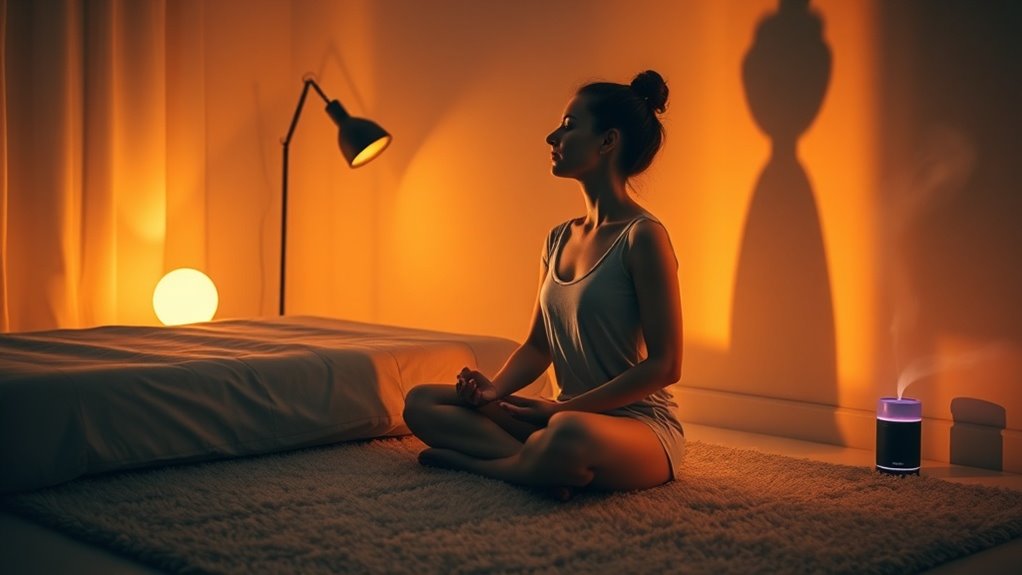
Since deep breathing exercises have been shown to activate the parasympathetic nervous system, they can be a highly effective way to calm your nervous system at night. Breath control techniques, especially diaphragmatic breathing, promote relaxation by engaging your diaphragm and slowing your breath rate. When you focus on deep, intentional breaths from your belly, you signal to your brain that it’s safe to unwind. This reduces stress hormones like cortisol and encourages a state of calm. Practice diaphragmatic breathing by placing one hand on your chest and the other on your belly, then inhale slowly through your nose, allowing your stomach to rise. Exhale gently through your mouth, ensuring your belly falls. Consistently practicing this form of breath regulation before bed can help lower heart rate, relax your muscles, and ease racing thoughts—making it easier to shift into restful sleep.
Incorporate Gentle Yoga or Stretching
Incorporating gentle yoga or stretching into your evening routine can effectively activate your parasympathetic nervous system, helping you unwind and prepare for restful sleep. Gentle stretches and calming poses promote relaxation by reducing muscle tension and calming the mind. Focus on slow, deliberate movements, such as neck rolls, seated forward bends, or gentle spinal twists, which encourage mindful breathing and release stress. These practices can lower cortisol levels and decrease sympathetic nervous system activity, making it easier to shift into sleep. Research shows that even brief sessions of gentle yoga can improve sleep quality and reduce insomnia symptoms. Keep your movements gentle and avoid overstretching to prevent activation of the sympathetic nervous system. Incorporating these calming poses into your nightly routine fosters a sense of safety and tranquility, supporting your body’s natural shift into rest and recovery.
Create a Relaxing Bedtime Routine
Establishing a consistent and calming bedtime routine can signal to your nervous system that it’s time to wind down, making it easier to shift into restful sleep. To enhance this process, consider these steps:
- Listen to calming music or nature sounds to lower cortisol levels and promote relaxation.
- Read a soothing bedtime story or engage in gentle journaling to quiet your mind.
- Practice slow, deep breathing or progressive muscle relaxation to reduce physical tension.
Creating a routine that incorporates these calming activities helps reinforce your body’s sleep signals and reduces nighttime anxiety. Consistency is key; doing these activities every night trains your nervous system to recognize the cues for rest. Keep your environment peaceful and free of distractions, and make this routine a loving, predictable part of your day. Over time, these habits support a more relaxed, peaceful transition into sleep.
Limit Screen Time Before Bed
Reducing screen time before bed is essential for calming your nervous system, as exposure to blue light from devices can interfere with melatonin production and disrupt your sleep cycle. To promote better sleep, create a device-free zone at least 30 to 60 minutes before bedtime. Blue light reduction is key—consider using blue light filters or glasses if you need to use devices, but minimizing their use is most effective. Engaging in screen-free activities like reading a book, journaling, or practicing gentle stretches can help signal to your body that it’s time to wind down. Establishing consistent boundaries around device use supports your nervous system’s natural rhythms and reduces alertness caused by screen stimulation. Remember, setting this limit isn’t just about avoiding screens; it’s about nurturing your overall well-being and ensuring a more restful, restorative night’s sleep.
Use Aromatherapy to Promote Calmness
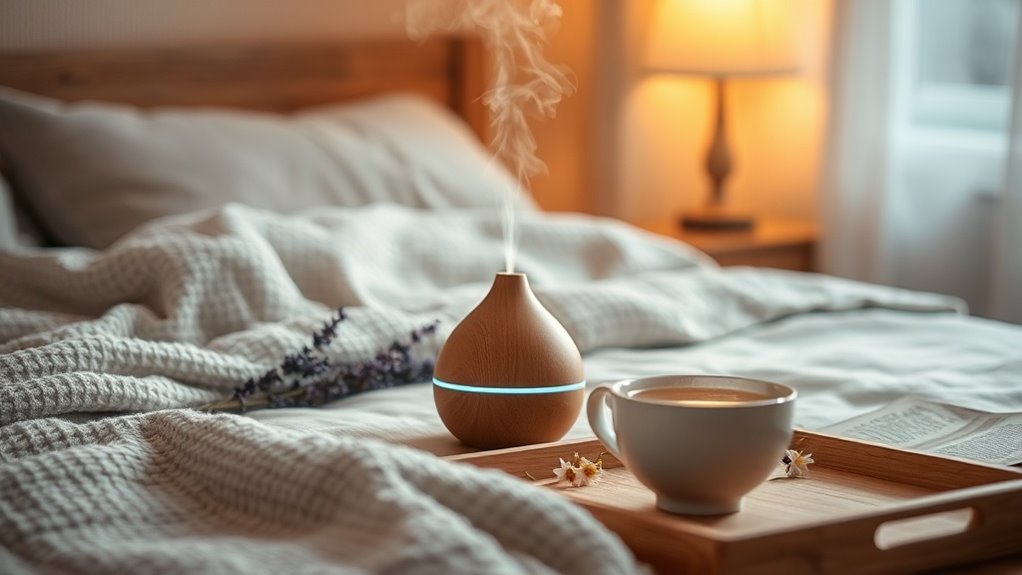
Using aromatherapy before bed can be a simple yet effective way to activate your parasympathetic nervous system and promote a sense of calm. Essential oils like lavender, chamomile, and bergamot have been shown to reduce stress and improve sleep quality. To harness these benefits, consider the following:
Aromatherapy before bed calms your nervous system and improves sleep with soothing essential oils.
- Use an aromatherapy diffuser in your bedroom to disperse a calming scent throughout the space.
- Add a few drops of essential oil to a diffuser or a cotton ball placed near your pillow.
- Incorporate essential oils into your nightly routine by mixing them with a carrier oil and applying to your wrists or temples.
These practices help signal your body to relax, lowering cortisol levels and encouraging restful sleep. Remember to choose high-quality essential oils and ensure good ventilation. Aromatherapy offers a gentle, natural way to soothe your nervous system and prepare for restorative sleep.
Engage in Mindfulness and Meditation
Have you ever noticed how your mind tends to race when you’re trying to fall asleep? Engaging in mindfulness practices and meditation techniques can help calm this mental chatter. Research shows that mindfulness improves emotional regulation and reduces anxiety, making it easier to shift into sleep. Simple meditation techniques, like focused breathing or body scans, activate the parasympathetic nervous system, promoting relaxation. Consistent practice, even for just a few minutes before bed, can lower cortisol levels and decrease rumination. By cultivating awareness of your thoughts and sensations, you create a mental space that encourages rest. Approaching mindfulness with patience and compassion allows your nervous system to settle, reducing nighttime stress. Incorporating these evidence-based strategies can enhance your ability to unwind and prepare your body for restorative sleep, fostering a more peaceful night.
Adjust Your Sleep Environment for Comfort
Creating a sleep-friendly environment is essential for calming your nervous system at night. When your sleep space feels comfortable, it signals to your body that rest is near, reducing stress and promoting relaxation. Focus on three key areas:
- Mattress comfort: Choose a mattress that supports your body’s natural alignment. A well-supported spine helps reduce tension and enhances sleep quality.
- Pillow selection: Opt for a pillow that keeps your neck and head in a neutral position. Comfort here minimizes muscle strain, easing your nervous system into relaxation.
- Lighting and noise: Keep your room dim and quiet. Darkness and calm sounds encourage melatonin production, signaling your body it’s time to rest.
Investing in these elements creates a soothing environment, making it easier to unwind and calm your nervous system at night. Small adjustments can considerably impact your ability to relax and fall asleep peacefully.
Avoid Stimulants and Heavy Meals Before Bed
While a comfortable sleep environment sets the stage for relaxation, your evening habits also play a crucial role in calming your nervous system. Consuming caffeine late in the day can elevate your alertness and disrupt your sleep cycle, making it harder to unwind. Similarly, heavy meals before bed increase digestion demands, which can cause discomfort and keep your nervous system active. To foster restful sleep, avoid caffeine intake after mid-afternoon and opt for lighter evening snacks. Instead, choose calming options like herbal tea or a small portion of nuts. Here’s a quick guide:
| Habit | Effect on Nervous System | Tips |
|---|---|---|
| Caffeine intake | Stimulates alertness | Cut off caffeine by 2 PM |
| Heavy meals | Disrupts digestion, sleep | Have dinner 2-3 hours earlier |
| Late night snacks | Can cause indigestion | Choose soothing, light foods |
| Alcohol consumption | Fragmented sleep | Limit or avoid alcohol |
| Spicy foods | Causes discomfort | Stick to mild, calming foods |
Being mindful of these habits supports your nervous system’s relaxation at night.
Common Questions
Can Herbal Teas Help Soothe My Nervous System at Night?
Yes, herbal teas like chamomile, lavender, and valerian root can help soothe your nervous system at night. These calming infusions contain herbal remedies known for their relaxing properties, which may reduce anxiety and promote sleep. While evidence varies, many find that incorporating these teas into their bedtime routine offers gentle support for calming your nerves naturally. Just make certain you’re not sensitive to any herbs and consult a healthcare provider if needed.
How Does Music Influence Relaxation Before Sleep?
Music, especially music therapy and soundscapes, can markedly soothe your mind and body before bed. Gentle melodies and calming soundscapes foster relaxation, reduce stress, and slow your heart rate, paving the way for peaceful sleep. Evidence supports that listening to relaxing music triggers the relaxation response, calming your nervous system. So, creating a calming composition or soundscape can be a simple, effective strategy to enhance your nighttime tranquility.
Are There Specific Sleep Positions That Promote Calmness?
Your sleep posture can notably promote calmness; sleeping on your back with proper support or on your side with a pillow encourages relaxation. These positions reduce strain and help regulate your nervous system. Incorporate relaxation techniques like deep breathing or progressive muscle relaxation before bed, which complement a calming sleep posture. Consistent, comfortable positions foster a peaceful shift into sleep, easing your nervous system and enhancing overall restfulness.
What Role Does Temperature Play in Calming the Nervous System?
Think of your nervous system as a delicate balance, where temperature regulation plays a crucial role. When your room is too hot or cold, it disrupts thermal comfort, making it harder to relax and calm your nerves. Maintaining a comfortable, cool environment helps lower your core body temperature, signaling your body it’s time to rest. This simple adjustment can support your body’s natural calming processes, promoting restful sleep and soothing your nervous system.
How Can I Manage Nighttime Anxiety Without Medication?
You can manage nighttime anxiety by practicing mindfulness meditation and breathing techniques. These methods help activate your parasympathetic nervous system, promoting relaxation and reducing stress. Focus on slow, deep breaths or guided meditation to calm racing thoughts. Consistent practice can improve your sleep over time, providing a natural, evidence-based approach to easing anxiety without medication, and fostering a gentle, compassionate connection with yourself during stressful nights.