
Creating a daily calm practice that feels natural starts with choosing simple, consistent habits that fit into your routine, like a few minutes of mindful breathing or journaling at a set time. Design a cozy, clutter-free space that invites relaxation, and gradually increase your practice as it becomes familiar. By integrating these small habits smoothly into your day, calmness can become effortless—just explore more ways to make peace an everyday part of your life.
Key Takeaways
- Choose a consistent, comfortable time and space to integrate the practice seamlessly into your daily routine.
- Start with short sessions, like five minutes, and gradually increase duration to build ease and familiarity.
- Incorporate simple techniques such as mindful breathing or journaling that easily fit into existing habits.
- Personalize your environment with calming elements to make the space inviting and conducive to relaxation.
- Use reminders or cues to reinforce the habit, making the practice feel natural and effortless over time.
Embracing Journaling as a Calming Habit
Have you ever noticed how putting your thoughts on paper can bring a sense of calm? Journaling offers a quiet space where you can process emotions and reduce stress, making it easier to calm your mind. When you reflect through regular writing, you become more aware of your feelings and patterns, helping you recognize what triggers stress or negativity. Using simple methods, like one-line entries or small notebooks, makes journaling feel achievable, even on busy days. Structured formats, such as daily pages or five-year journals, encourage consistency, turning journaling into a natural habit. Celebrating your progress—like noting achievements or insights—can boost feelings of contentment and inner calm. Over time, this practice becomes a safe refuge, helping you manage emotional ups and downs with greater ease. Embracing journaling as a calming habit is a gentle, practical way to nurture your mental well-being daily.
Simple Techniques to Incorporate Mindfulness Meditation
Starting a mindfulness meditation practice doesn’t have to be complicated; simply find a comfortable seated position and focus on your natural breath. As you breathe in and out, notice the rhythm of your mind settling into this gentle rhythm, allowing your thoughts to flow without attachment. You can also incorporate a body scan, relaxing muscles from head to toe, observing sensations without judgment—this helps anchor your awareness in the present. Using mindfulness apps like Insight Timer or Headspace can provide guided sessions, making it easier to stay consistent. Start with just 10-15 minutes, gradually increasing as you feel more comfortable. Establish a regular time—morning or evening—that fits seamlessly into your day. These simple techniques help you develop a natural, calming relationship with your mind, making mindfulness meditation an accessible and nourishing part of your daily life.
Organizing Your Day With Effective List-Making
Once you’ve begun cultivating mindfulness, organizing your day can become even more manageable. Effective list-making helps calm the mind by reducing mental clutter and providing clear direction. Use a daily to-do list in your planner to prioritize important tasks, which keeps you focused and prevents overwhelm. Writing grocery lists or key points for calls ahead of time minimizes forgetfulness and last-minute stress, allowing you to stay present. Keep small notepads in each room for quick notes or tasks that arise throughout the day—this keeps your thoughts organized and prevents mental noise. Limiting your daily list to the top three priorities ensures you stay focused on what truly matters, creating a sense of achievement without feeling overloaded. Digital apps or virtual assistants can also streamline your task management, making it easier to stay on track and maintain a calm, organized mind. With these simple techniques, organizing your day becomes a natural part of your calm routine.
Building Consistency in Your Relaxation Routine
Building consistency in your relaxation routine can transform it from a sporadic activity into a dependable source of calm. To do this, choose a specific time each day—morning or evening—that feels natural to you. Starting with just five-minute sessions helps you build the habit without feeling overwhelmed. As you become comfortable, gradually increase the duration, making it easier to stick with over time. Using cues like setting reminders or pairing your relaxation with existing daily habits can reinforce consistency. Creating a dedicated, clutter-free space for your practice makes it inviting and easier to engage regularly. Tracking your progress through a journal or app provides motivation and helps you see how far you’ve come. Remember, consistency isn’t about perfection but about showing up for yourself, day after day. Small, steady steps will make your calm practice feel more natural and sustainable in the long run.
Creating a Peaceful Space for Daily Practice
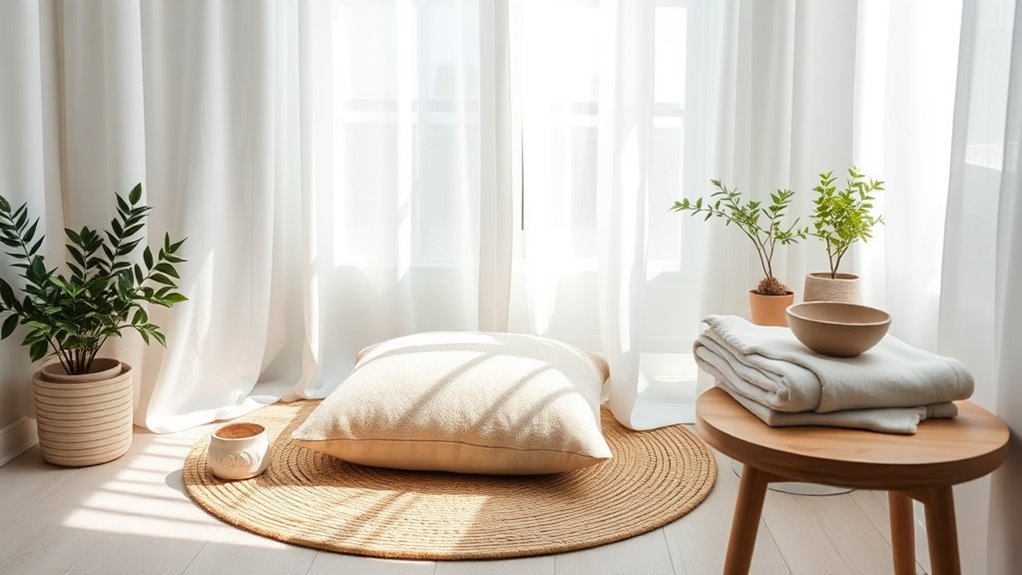
Creating a peaceful space for your daily practice can make a significant difference in how easily you slip into a state of peace. When your environment feels calm and inviting, it helps you pay attention to your mental health and fosters a sense of tranquility that can carry into your daily life. Personalizing your space with calming elements like soft lighting, plants, or meaningful objects can help you connect more deeply with your practice, making it easier to calm anxiety and regulate emotions. Keep your area organized and clutter-free; a tidy space promotes a sense of readiness and helps you focus. Designate a consistent time each day, so your mind associates this spot with calmness. Using a comfortable cushion or chair supports physical relaxation, encouraging longer, more peaceful sessions. Over time, this dedicated space becomes a sanctuary that supports your overall well-being and helps you find peace amidst daily stressors.
Tips for Maintaining Motivation and Patience
Building a calming routine takes time, so it’s important to set realistic expectations and start small. Celebrate even the tiniest progress to keep yourself motivated, and remember that patience is key as habits develop. Stay committed by regularly reminding yourself of the long-term benefits, and trust that persistence will pay off.
Set Realistic Expectations
Even when you’re committed to establishing a daily calm practice, it’s important to set realistic expectations. Start with small, achievable goals that fit your lifestyle, so you’re more likely to stay motivated and avoid feeling overwhelmed. Remember, progress takes time; be patient and recognize that consistency over days and weeks brings real benefits. Adjust your expectations based on your current stress levels and daily schedule, making sure your routine remains sustainable. Celebrate even brief moments of calm—they reinforce positive feelings and motivate you to keep going. And don’t be discouraged by setbacks. They’re a normal part of the process, offering opportunities to learn and gently recommit to your practice. Setting realistic expectations keeps you motivated and helps your calm routine feel natural.
Embrace Small Progress
- Noting small achievements like a five-minute meditation or journaling session.
- Appreciating consistent effort rather than perfection.
- Understanding setbacks are normal and part of growth.
These steps remind you that gradual progress adds up over time. Celebrating each milestone, big or small, helps maintain momentum and patience. Remember, even brief daily efforts contribute to long-term calmness. Embracing small progress makes your calm practice feel more natural and sustainable.
Practice Patience Consistently
Practicing patience consistently is essential for cultivating a calm mindset, especially when progress feels slow. The Patience Practice you develop helps reinforce your commitment to your daily routine, making setbacks feel less discouraging. Set small, achievable goals to keep motivation high and prevent frustration from building. Remember, building new habits takes time, so remind yourself that patience is part of the process. When setbacks occur, incorporate gentle self-compassion—be kind to yourself—because resilience is key to long-term consistency. Tracking your progress with journals or checklists provides visual proof of your dedication, boosting your motivation. Over time, this consistent Patience Practice will help you stay centered, fostering a calm and natural approach to your daily mindfulness.
Recognizing the Benefits of Regular Calm Practices
When you make calm practices a regular part of your day, you’ll notice your emotional resilience grows, helping you handle stress more effectively. These routines also ease physical tension and sharpen your mental clarity, making it easier to stay focused. Over time, you’ll see how consistent calm can truly support your overall well-being.
Enhances Emotional Resilience
Engaging in regular calm practices like meditation and journaling can substantially boost your emotional resilience, helping you better manage stress and bounce back from setbacks. These routines strengthen your ability to handle emotional triggers and reduce reactivity. Consistent mindfulness builds a buffer against overwhelm, decreasing burnout and anxiety.
Here are some ways calm practices support your resilience:
- They improve your stress management skills, allowing you to stay centered during tough times.
- They increase self-awareness, helping you recognize early signs of emotional triggers.
- They cultivate inner stability and patience, empowering you to navigate challenges with greater ease.
Reduces Physical Tension
Regular calm practices like meditation and body scans can substantially reduce physical tension that often accumulates in our muscles throughout the day. By focusing on muscle relaxation, you become more aware of where tension resides and can target those areas intentionally. This mindfulness helps release stored stress, easing stiffness and discomfort. Consistent relaxation techniques also lower cortisol levels, which reduces overall bodily tension. Over time, these routines improve posture and decrease muscle tightness, making everyday movements more comfortable. Recognizing physical tension early allows you to address it before it becomes chronic. Incorporating simple tension-release methods into your daily routine rewires your nervous system, making relaxation during stressful moments more natural. Ultimately, this practice not only eases muscle tension but creates a foundation for lasting physical ease.
Promotes Mental Clarity
As you incorporate calm practices into your daily routine, you may notice a significant boost in mental clarity. These habits reduce mental fog and distractions, helping you focus more easily. Mindful eating is a perfect example—paying attention to your food can clear mental clutter and enhance concentration. Regular calm routines also improve your decision-making and problem-solving skills by fostering a sense of mental spaciousness. To maximize these benefits, consider:
- Practicing daily meditation or journaling to clear your mind
- Engaging in mindful eating to sharpen focus and awareness
- Reflecting calmly to reduce stress-induced cognitive impairments
Over time, these practices help you think more clearly, process information efficiently, and prioritize effectively, making your daily decisions feel more natural and less overwhelming.
Making Calmness a Seamless Part of Your Lifestyle
Making calmness a seamless part of your lifestyle means finding simple ways to weave relaxation into your daily routine so it feels natural and effortless. One effective approach is incorporating short, consistent practices like 5-minute mindful breathing or quick journaling sessions. Deep breathing is especially helpful—you can do it during a break or while waiting in line. Use tools like a meditation app or a small notebook to make calming activities easily accessible whenever you need a moment of peace. Integrate these techniques into routines you already follow, like taking deep breaths during work breaks or jotting down a gratitude list in the morning. Creating a dedicated, clutter-free space at home for your calm practice can also help. Setting gentle reminders or cues, such as a specific time or an environmental trigger, will prompt you to pause and breathe deeply without added effort, making calmness feel like a natural part of your day.
Common Questions
What Are the 3 C’s of Mindfulness?
Oh, you know, just the mystical 3 C’s of mindfulness—Calm, Clarity, and Compassion. Basically, they’re your secret weapons for mastering the Present Moment. Calm helps you stay grounded, Clarity clears the mental fog, and Compassion keeps your heart open. When you weave these into your daily routine, you’ll find mindfulness becomes natural, gentle, and truly feels like a friend rather than a chore. Easy, right?
What Are the 5 R’s of Mindfulness?
The 5 R’s of mindfulness are Recognize, Reframe, Relax, Release, and Respond. You start by recognizing your thoughts, feelings, and physical sensations, often through breath awareness. Then, you reframe your perspective with curiosity and compassion. Relax your body and mind, releasing tension. Next, let go of negative emotions or thoughts, which helps you respond more calmly and intentionally. This simple, compassionate approach can make your daily calm practice feel more natural and sustainable.
What Are the 7 C’s of Mindfulness?
The 7 C’s of mindfulness are Curiosity, Calmness, Clarity, Concentration, Compassion, Confidence, and Creativity. In your cultural context, embracing these qualities helps you stay present and compassionate, fostering a natural, sustainable practice. By nurturing curiosity and calmness, you create a space for clarity and confidence, making mindfulness feel authentic rather than forced. Incorporating these C’s into daily life supports emotional balance and deepens your connection with yourself and others.
What Are the 4 P’s of Mindfulness?
Think of the 4 P’s as gentle guiding stars on your journey to embracing the present moment. Presentation invites you to observe with kindness, without judgment. Presence means fully engaging with now, not lost in past or future. Practice encourages regular, mindful habits, while Patience reminds you that cultivating this awareness takes time. Together, these elements nurture a natural, calming connection to each moment, helping you find peace in everyday life.