
To achieve daily balance, try integrating mindful breathing exercises to lower stress and boost resilience, making use of slow inhalations and gentle exhalations. Establish consistent routines and boundaries to create stability, manage time effectively, and prevent burnout. Incorporate short physical activity breaks during the day, like stretching or quick walks, to improve circulation and alertness. By combining these scientifically supported techniques, you’ll find more stability and well-being—discover how to tailor these strategies to fit your life.
Key Takeaways
- Practice mindful breathing daily to activate relaxation responses and reduce stress levels effectively.
- Establish consistent routines and boundaries to create stability and prevent burnout.
- Incorporate short physical activity breaks to boost energy, improve posture, and enhance mental clarity.
- Use regular check-ins to adjust routines, ensuring ongoing emotional and physical balance.
- Combine these techniques for sustainable stress management and overall well-being.
Prioritize Mindful Breathing Exercises
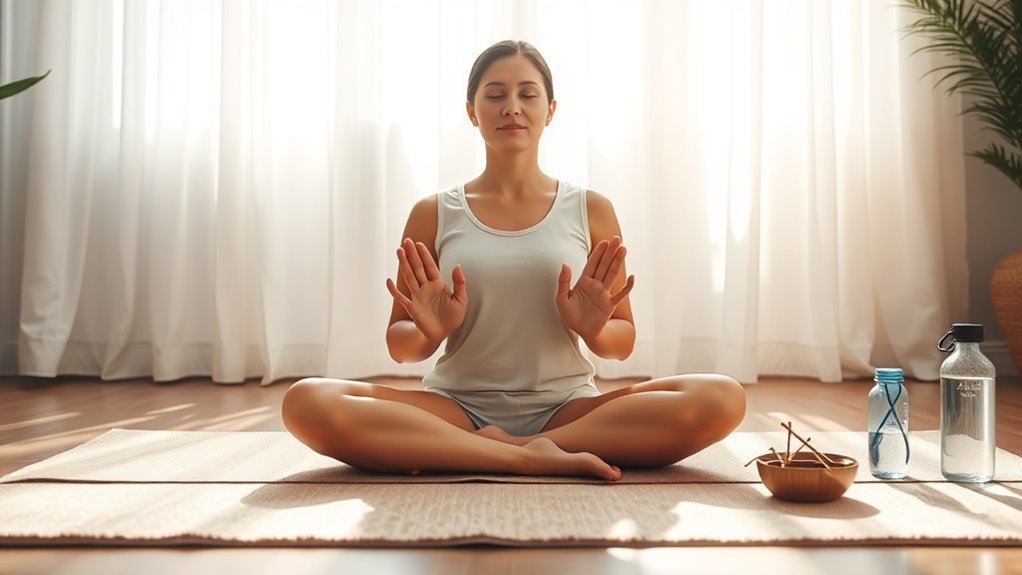
Since mindful breathing exercises have been shown to activate the parasympathetic nervous system, incorporating them into your daily routine can considerably reduce stress and improve emotional regulation. Mindful breathing involves paying close attention to your breath patterns, such as inhaling slowly through your nose and exhaling gradually through your mouth. Scientific studies indicate that regular practice lowers cortisol levels and decreases sympathetic nervous system activity, which are linked to stress responses. By focusing on your breath, you create a moment of calm amid daily chaos, helping to interrupt stress cycles. This practice can be easily integrated into various settings—whether during breaks at work, before sleep, or after challenging situations. Consistent mindful breathing not only promotes immediate stress reduction but also enhances long-term resilience. Over time, it helps you develop greater awareness of emotional triggers, enabling you to respond more thoughtfully rather than reactively.
Establish Consistent Routines and Boundaries
Establishing consistent routines and boundaries is essential for maintaining emotional stability and reducing daily stress. When you create predictable patterns, you improve your time management and strengthen emotional regulation, leading to greater resilience. Clear boundaries help prevent burnout and promote focus, allowing you to allocate energy effectively throughout the day.
Consistent routines and boundaries boost emotional stability and prevent burnout.
Consider these key principles:
- Set fixed wake-up and sleep times to regulate your circadian rhythm.
- Designate specific periods for work, leisure, and rest to optimize time management.
- Communicate boundaries clearly to colleagues and family to protect your focus.
- Incorporate regular check-ins to assess and adjust routines for ongoing emotional balance.
Incorporate Short Physical Activity Breaks
Incorporating short physical activity breaks into your daily routine can substantially enhance your overall well-being and productivity. Evidence shows that brief stretching routines and quick cardio sessions help reduce sedentary behavior, improve circulation, and boost mental alertness. You don’t need extensive workouts; even five-minute breaks can make a difference. Consider standing up and performing simple stretches to relieve muscle tension, especially if you work at a desk. Alternatively, engage in quick cardio activities like brisk walking or jumping jacks to elevate your heart rate. These intentional pauses not only break up long periods of inactivity but also promote better posture and energy levels throughout the day. Regular short activity breaks are supported by research as an effective strategy for maintaining physical health and mental focus, making them a practical addition to your daily balance techniques. Integrating these moments into your schedule can lead to sustained productivity and improved overall health.
Common Questions
How Long Should Mindful Breathing Exercises Last Daily?
You should aim for about 10 to 15 minutes of mindful breathing daily, like tuning a musical instrument to perfect harmony. Focus on slow, deep breaths, adjusting breathing depth to stay comfortable, and incorporate mindful pauses to enhance relaxation. Research suggests this duration effectively reduces stress and improves focus. Remember, consistency matters more than duration—it’s better to practice a few minutes daily than to overdo it.
What Are Effective Boundaries for Work and Personal Life?
Effective boundaries for work and personal life involve clear work life separation and boundary setting strategies. You should define specific work hours and stick to them, avoid checking emails outside these times, and communicate your limits to colleagues and family. Regularly reviewing and adjusting these boundaries guarantees they remain effective, reducing burnout and enhancing overall well-being. Evidence suggests that consistent boundary setting fosters a healthier work-life balance and improves mental health.
How Often Should Physical Activity Breaks Be Taken?
Think of physical activity breaks like invigorating pauses in your day; ideally, you should take them every 30 to 60 minutes. During these breaks, incorporate stretching routines to relieve muscle tension and boost circulation. Staying hydrated habits are also essential—drink water regularly to maintain focus and energy. Evidence suggests short, frequent breaks improve overall productivity and well-being, making it easier to sustain your daily balance and health.
Can These Techniques Improve Mental Health Quickly?
Yes, these techniques can improve your mental health quickly by promoting stress reduction and enhancing emotional resilience. Regularly integrating short activities like deep breathing, mindfulness, or brief physical breaks helps lower cortisol levels and boosts mood. Evidence shows consistent practice can lead to faster emotional regulation, reducing anxiety and improving overall mental well-being. Incorporating these simple strategies into your daily routine can provide noticeable mental health benefits in a short amount of time.
Are There Specific Routines for Different Lifestyles?
Have you considered personalized routines tailored to your lifestyle? Absolutely. Effective balance techniques recognize lifestyle adaptability, meaning routines should fit your schedule, preferences, and stressors. For instance, busy professionals might benefit from short mindfulness practices, while students could incorporate quick exercise breaks. Evidence suggests customizing routines enhances adherence and effectiveness, improving mental well-being over time. So, crafting routines that suit your unique lifestyle is essential for sustainable mental health improvement.