
To fall asleep without screens or stimulants, try establishing a calming bedtime routine, like gentle stretching or listening to quiet music. Create a sleep-friendly environment by keeping your room cool, dark, and quiet, and avoid bright lights before bed. Practice relaxation techniques such as deep breathing or body scans to ease your mind. Engaging in daytime physical activity can also help. If you want more practical ideas, there’s plenty more that can help you get restful sleep.
Key Takeaways
- Establish a consistent bedtime routine with calming activities like reading or gentle stretching.
- Create a sleep-friendly environment: dark, cool, quiet, and clutter-free.
- Practice relaxation techniques such as deep breathing or body scans before bed.
- Engage in light daytime physical activity, like walking or stretching, to promote sleepiness.
- Limit artificial light exposure in the evening by reducing screen time and using dim lighting.
Establish a Consistent Bedtime Routine

Establishing a consistent bedtime routine can particularly improve your ability to fall asleep. Good sleep hygiene involves developing regular bedtime rituals that signal to your body it’s time to wind down. When your sleep schedule stays consistent, your internal clock aligns, making it easier to drift off naturally. Start by choosing a fixed time to go to bed and wake up, even on weekends. Incorporate calming activities—such as reading, gentle stretching, or listening to quiet music—that help you relax. Avoid stimulating behaviors, like vigorous exercise or intense conversations, close to bedtime. Consistent routines reinforce your body’s sleep signals, reducing bedtime anxiety and fostering a sense of predictability. Over time, these habits strengthen your sleep-wake cycle, making sleep onset smoother. Remember, the key is persistence; the more reliable your bedtime rituals, the better your chances of falling asleep without screens or stimulants.
Create a Calm and Sleep-Friendly Environment
Creating a sleep-friendly environment is essential for making it easier to fall asleep and stay asleep throughout the night. Your bedroom should promote relaxation and minimize disruptions. Managing ambient noise is key; consider using white noise machines or fans to drown out sudden sounds that can wake you. Consistent, gentle background noise can help your brain associate this environment with sleep, fostering deeper rest. Additionally, blackout curtains are highly effective at blocking outside light, which can interfere with your circadian rhythm. Darkness signals to your body that it’s time to wind down, promoting melatonin production. Keep your room cool, quiet, and dark—these conditions support your natural sleep cycle. Avoid clutter and ensure your sleep space feels comfortable and inviting. Creating this calm, sleep-friendly environment isn’t just about comfort; it’s an evidence-based approach that sets the foundation for restful, restorative sleep.
Practice Relaxation Techniques and Mindfulness
Since your mind often races when it’s time to sleep, practicing relaxation techniques and mindfulness can help calm your thoughts and prepare your body for rest. Breathing exercises, like slow, deep breaths, activate your parasympathetic nervous system, reducing stress and promoting relaxation. A body scan involves systematically bringing awareness to different parts of your body, releasing tension as you go. This practice helps you disconnect from racing thoughts and anchor yourself in the present moment. Research shows that mindfulness reduces sleep onset latency and improves sleep quality. Set aside a few minutes before bed to focus on slow breathing or perform a body scan, allowing your mind to settle. These techniques are simple, drug-free methods to ease your transition into sleep, especially when screens and stimulants are off-limits. Incorporating relaxation and mindfulness into your nightly routine can create a calming rhythm that signals your body it’s time to rest.
Engage in Light Physical Activity During the Day
Engaging in light physical activity during the day can considerably improve your sleep quality. Activities like stretching exercises and daytime walks help regulate your circadian rhythm and reduce stress hormones that interfere with sleep. Incorporating stretching exercises in your routine can loosen tense muscles, promote relaxation, and signal to your body that it’s time to unwind. A short walk outside during daylight hours exposes you to natural light, which supports healthy sleep-wake cycles. Even 20-30 minutes of gentle activity can boost your mood and energy levels, making it easier to fall asleep at night. It’s important to avoid vigorous exercise close to bedtime, as it may elevate adrenaline and disrupt sleep. Instead, focus on consistent, moderate activity during the day to create a natural rhythm that primes your body for restful sleep. This approach helps you fall asleep more easily without relying on screens or stimulants.
Limit Exposure to Artificial Light Before Bed
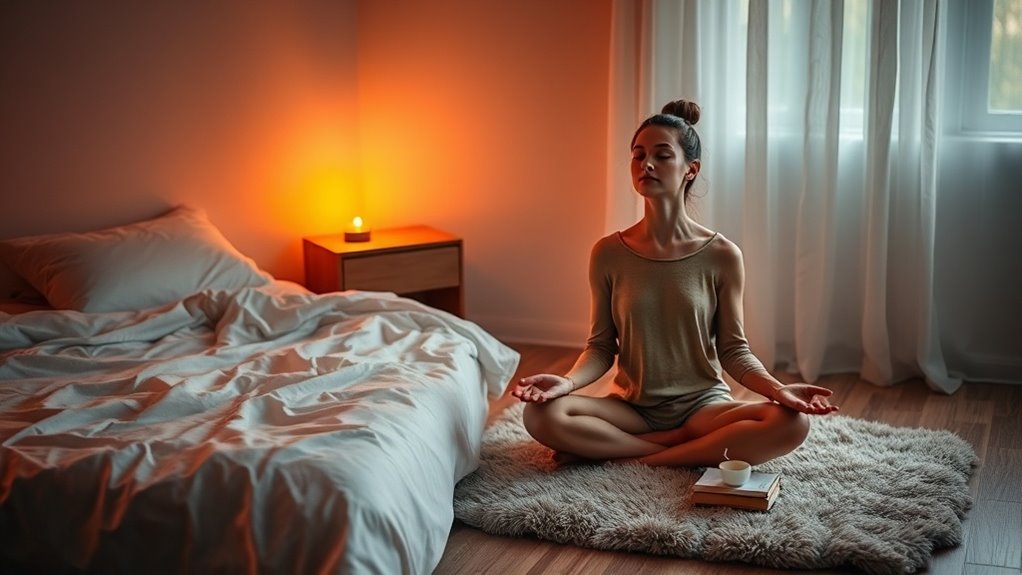
Reducing your exposure to artificial light before bed is essential for signaling to your body that it’s time to wind down. Blue light emitted by screens—phones, tablets, computers—can disrupt your circadian rhythm by suppressing melatonin production. This interference makes it harder to fall asleep naturally. To improve sleep quality, aim to limit screen exposure at least an hour before bedtime. Instead, consider dimming the lights in your environment or using amber-tinted glasses that block blue light. Engaging in relaxing activities like reading a physical book or practicing gentle meditation can help your body prepare for rest. Remember, your body relies on darkness to signal that it’s time to sleep, so creating a screen-free wind-down routine is crucial. Small adjustments like these can considerably enhance your ability to fall asleep without stimulants or screens, supporting healthier sleep patterns and overall well-being.
Common Questions
How Long Does It Typically Take to Fall Asleep Without Screens or Stimulants?
Typically, it takes about 10-20 minutes for you to fall asleep without screens or stimulants, though individual sleep latency varies. To help speed this process, practice relaxation techniques like deep breathing or progressive muscle relaxation. Creating a calming environment and maintaining a consistent sleep schedule can also improve your chances of falling asleep more quickly. Patience and consistency are key to establishing healthy sleep habits.
Can Certain Foods Improve Sleep Quality Naturally?
Did you notice how a handful of almonds or a banana can sometimes help you drift off? Sleep inducing snacks rich in sleep promoting nutrients like magnesium, tryptophan, and melatonin may naturally boost your sleep quality. Incorporating foods such as cherries, warm milk, or oats into your evening routine can support relaxation. These gentle, evidence-based options might just make your nights more restful without the need for supplements or screens.
Are There Any Natural Supplements That Aid Sleep?
Yes, natural supplements like herbal remedies such as valerian root, chamomile, and lavender can help promote sleep. Melatonin supplements are also effective for regulating your sleep-wake cycle, especially if your routines are disrupted. However, it’s best to consult with a healthcare professional before starting any new supplement. These options can be gentle, evidence-based aids that support your efforts to fall asleep naturally and peacefully.
How Can I Handle Night Waking Without Using Screens or Pills?
Think of night waking as a gentle tide—you can ride it with calming strategies. When you wake, avoid screens and instead focus on relaxing techniques like deep breathing, progressive muscle relaxation, or visualizations. Establishing a calming bedtime routine helps signal your body it’s time to sleep. If you wake often, stay relaxed and practice these techniques to gently guide yourself back to restful sleep, supporting your natural circadian rhythm.
What Are Signs of Sleep Deprivation From Poor Habits?
You might notice sleep deprivation signs like feeling constantly tired, having trouble concentrating, or experiencing mood swings. Poor habits such as irregular sleep schedules, caffeine late in the day, or screen use before bed can worsen these effects. If you’re often yawning, struggling to focus, or feeling irritable, it’s a sign your sleep quality is suffering. Addressing these habits can improve your rest and overall well-being.