
To feel less rushed and more grounded, try focusing on mindful breathing—inhale deeply through your nose and exhale slowly through your mouth to calm your nervous system. Simplify your tasks by prioritizing what truly matters and letting go of non-essentials. Make time for stillness, maybe through journaling or quiet moments, and spend time outside or moving mindfully in nature. Setting boundaries helps protect your energy. Keep exploring these gentle practices to find greater calm and presence in your day.
Key Takeaways
- Practice mindful breathing to slow your mind and bring awareness to the present moment.
- Prioritize essential tasks and break them into manageable steps to reduce overwhelm.
- Create intentional pauses for stillness and reflection to gain clarity and perspective.
- Spend time in nature or move mindfully to foster calmness and grounding.
- Set clear boundaries to protect your time and energy, avoiding unnecessary rushing.
Embrace Mindful Breathing Techniques
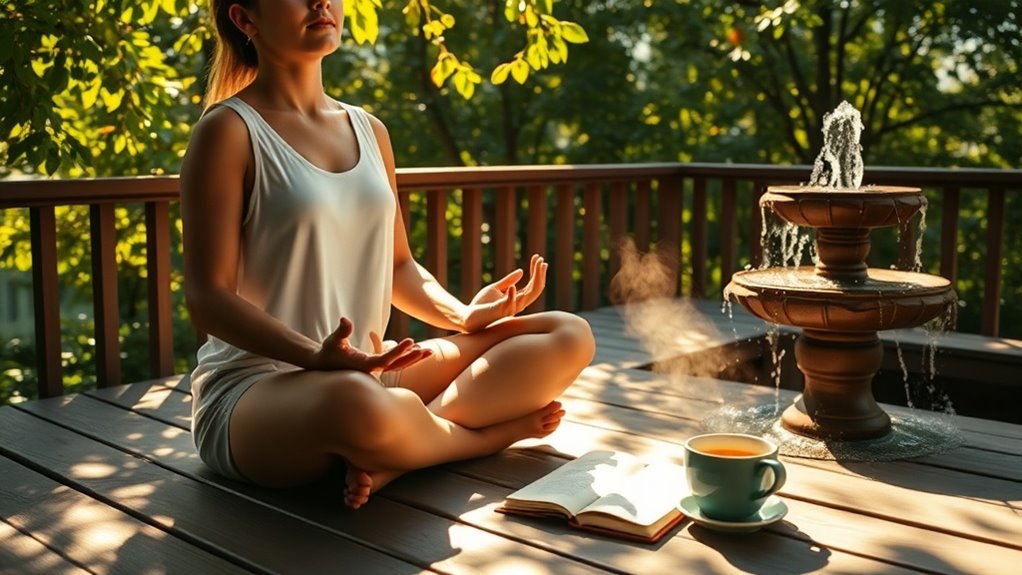
If you’re feeling overwhelmed and rushing through your day, taking a moment to embrace mindful breathing can make a real difference. Breathing exercises help slow your mind and bring you back to the present moment. By focusing on your breath, you develop mindful awareness—an essential skill for grounding yourself when everything feels hectic. Start by taking a deep breath in through your nose, feeling your chest expand, then slowly exhale through your mouth. Repeat this process a few times, paying close attention to each inhale and exhale. This simple practice encourages your nervous system to relax and helps clear mental clutter. When you consciously connect with your breath, you create a pause—a space to reset and regain perspective. Over time, these mindful breathing techniques become a powerful tool to reduce stress, increase clarity, and foster a sense of calm amidst the chaos.
Prioritize and Simplify Your Tasks
When your to-do list feels overwhelming, taking a moment to prioritize and simplify can bring immediate relief. Focus on what truly matters, rather than trying to do everything at once. Effective time management means identifying high-impact tasks and letting go of less vital ones. Delegating tasks can lighten your load and free up mental space, helping you stay grounded. Break complex tasks into smaller, manageable steps—this makes progress feel achievable and reduces stress.
Here’s a visual reminder:
| Urgent & Important | Not Urgent but Important | Urgent but Not Important |
|---|---|---|
| Critical deadlines | Planning for future | Responding to minor alerts |
| Immediate needs | Personal growth | Routine errands |
| Long-term goals | Distractions | |
Prioritizing and simplifying isn’t about rushing; it’s about creating clarity and space for what truly matters.
Create Space for Stillness and Reflection
Have you ever noticed how taking a moment of stillness can shift your entire perspective? Creating space for stillness and reflection allows you to step back from the constant rush and reconnect with yourself. You might find mindful journaling helpful—writing without judgment or agenda can clarify your thoughts and deepen your awareness. Consider dedicating a few minutes each day to put pen to paper, capturing what’s on your mind or simply observing your feelings. Silent retreats are another powerful way to cultivate stillness; they offer a dedicated environment free from distractions, encouraging genuine reflection. These practices aren’t about stopping life but creating intentional pauses where you can breathe, process, and gain insight. Over time, embracing stillness becomes a essential part of grounding yourself amidst chaos, helping you approach each moment with greater clarity, calm, and presence.
Cultivate Presence Through Nature and Movement
Stepping outside and engaging your body in movement can be a gentle yet powerful way to ground yourself in the present moment. When you connect with nature, you tap into a sense of calm that’s often missing in daily routines. As you walk, breathe, or stretch outdoors, focus on movement mindfulness—being fully aware of how your body feels with each step or stretch. Notice the sensation of the ground beneath your feet, the sounds of leaves rustling, or the breeze on your skin. This intentional presence deepens your nature connection, helping you feel more centered and less rushed. Movement in nature isn’t about performance; it’s about being in tune with your body and environment. Over time, these small moments of awareness can shift your perspective, making everyday life feel less hurried and more grounded in the here and now.
Establish Boundaries to Protect Your Time

If you want to feel less overwhelmed and more in control of your time, establishing clear boundaries is essential. Setting limits helps protect your energy and prevents you from overcommitting. It’s okay to say no when something doesn’t align with your priorities or if you simply need space. Remember, saying no isn’t a rejection; it’s a way to honor your well-being. Start by identifying your non-negotiables and communicate them kindly but firmly. You don’t need to justify every decision—your time is valuable. Boundaries create a sense of safety and clarity, reducing the feeling of being pulled in too many directions. By setting limits, you give yourself permission to focus on what truly matters, making your days feel more manageable and grounded. It’s a gentle but powerful act of self-care that fosters respect for your needs and helps you stay centered amid life’s busyness.
Common Questions
How Can I Stay Present During Stressful Moments?
When stress hits, take a moment to focus on your breath. Practice mindful breathing—inhale slowly through your nose, then exhale gently through your mouth. Grounding exercises, like feeling the texture of an object or naming five things you see, can anchor you in the present. Remind yourself that this moment is temporary, and with each breath, you’re reconnecting with your calm, helping you stay present and centered.
What Are Quick Ways to Reset When Feeling Overwhelmed?
When overwhelm hits, think of it as a storm passing through your mind. You can anchor yourself with quick breathing exercises—inhale slowly, then exhale fully—or pause for a brief meditation. These gentle acts help you regain your footing, turning chaos into calm. Remember, even in turbulent times, a few mindful moments can be your lighthouse, guiding you back to clarity and peace amid the storm.
How Do I Overcome Distractions to Stay Grounded?
To overcome distractions and stay grounded, start with mindful breathing—take slow, deep breaths to center yourself. Practice focused attention by gently redirecting your mind whenever it wanders. Remember, it’s normal for distractions to arise; be compassionate with yourself. Regularly pausing for mindful breathing helps you regain clarity and presence, making it easier to stay grounded amid chaos. You’re capable of cultivating this calm with patience and gentle persistence.
Can Mindfulness Techniques Be Effective for Severe Anxiety?
Yes, mindfulness techniques can be quite helpful, even for severe anxiety. Through meditation practices and breathing exercises, you can gently ease your mind and find moments of calm amidst chaos. These practices don’t erase anxiety but help you manage it with compassion and patience. Remember, it’s okay to take small steps, and over time, you’ll discover a steadiness that supports your journey toward feeling more grounded and at peace.
How Do I Maintain Calmness in a Busy Environment?
To stay calm in a busy environment, focus on mindful breathing—deep, slow breaths that anchor you in the present moment. Use grounding exercises like feeling your feet on the ground or noticing objects around you to regain control and calm your mind. Remember, it’s okay to pause briefly; these small moments can make a big difference in restoring your sense of calm amidst the chaos.