
For a quick, effective balance boost, try these three exercises: stand on one leg for 15-30 seconds, keeping your hips level and gaze forward; walk heel-to-toe slowly to improve coordination and ankle stability; and perform side leg raises to strengthen hip muscles and enhance lateral stability. These exercises require no equipment and can be done anywhere in just a few minutes. Keep going, and you’ll discover more simple ways to maintain your balance and prevent falls.
Key Takeaways
- Perform single-leg stands for 15-30 seconds per leg to boost stability and ankle strength.
- Practice heel-to-toe walking slowly to enhance coordination and proprioception.
- Incorporate side leg raises to strengthen hip muscles and improve lateral stability.
- Use controlled movements and increase duration to challenge your balance within three minutes.
- Combine these exercises with regular practice to reduce fall risk and improve overall stability anywhere.
Single-Leg Stand
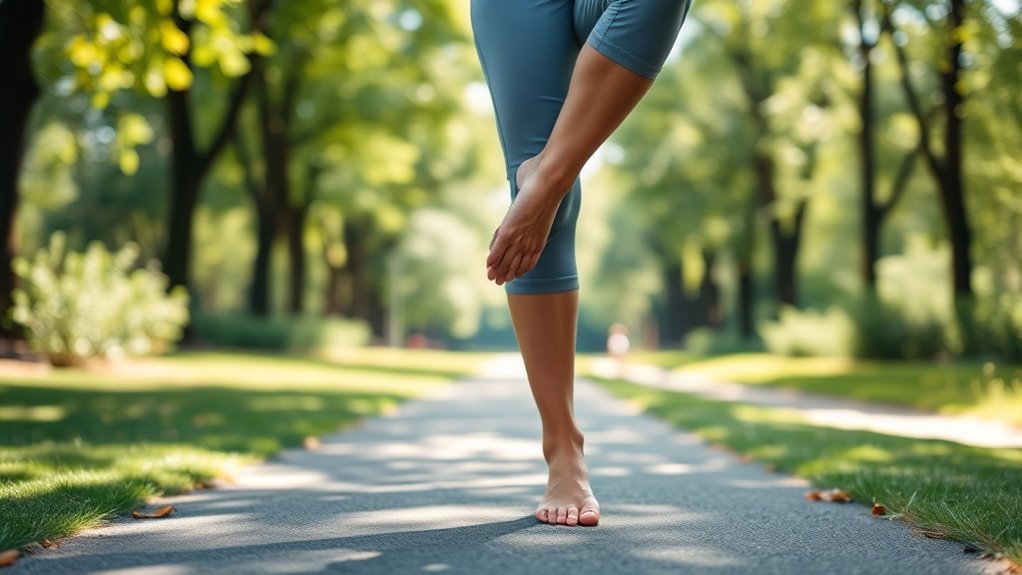
The single-leg stand is a simple yet effective exercise to improve your balance and stability. By standing on one leg, you engage your ankle muscles, promoting ankle strengthening essential for preventing sprains and improving overall foot stability. This exercise also requires core stability to maintain your posture, helping to develop a strong, balanced core that supports your entire body. To perform it correctly, find a flat surface and lift one foot off the ground, keeping your hips level and your gaze forward. Hold this position for 15-30 seconds, then switch sides. As you become more comfortable, increase the duration or try balancing on an unstable surface for added challenge. This exercise not only enhances ankle strength but also trains your core to maintain balance, reducing the risk of falls and improving coordination. Incorporate it into your routine for a quick, effective way to boost stability anywhere.
Heel-to-Toe Walk
Building on your balance foundation, the heel-to-toe walk is an effective exercise to improve your stability and coordination. It targets ankle flexibility, which is essential for maintaining proper gait stability. To perform this exercise, place one foot directly in front of the other, heel touching toes, and walk forward slowly. Focus on keeping your posture upright and your gaze forward. This movement challenges your proprioception and enhances control over ankle and foot muscles. As you progress, you’ll notice increased confidence in maintaining balance during daily activities. The heel-to-toe walk also sharpens your gait, reducing the risk of falls by strengthening stabilizer muscles. It’s simple to do anywhere, requiring minimal space and no equipment. Regular practice improves ankle mobility and overall stability, making it a valuable addition to your balance routine. Incorporate this exercise into your daily schedule for noticeable improvements in gait stability and coordination.
Side Leg Raises
Side leg raises are a simple yet effective exercise to enhance hip strength and stability. To perform this move, lie on your side with your legs extended and stacked. Keep your core engaged to maintain balance and prevent unnecessary movement. Lift your top leg slowly, focusing on hip stability rather than momentum. Hold briefly at the top, then lower your leg with control. This exercise targets the hip abductors, essential for lateral hip stability, which supports overall balance and reduces injury risk. Maintaining core engagement throughout ensures proper form and prevents compensatory movements. Side leg raises can be done anywhere, requiring no equipment, making them ideal for quick balance improvements. Incorporating this exercise into your routine helps strengthen hip muscles, improve core stability, and enhance overall balance, especially when done regularly and with mindful control. Remember, controlled movements are key to maximizing benefits and preventing strain.
Common Questions
Can These Exercises Help Improve My Posture?
Did you know over 80% of adults experience back pain, often due to poor posture? These exercises can definitely help improve your posture by strengthening your core muscles and enhancing muscle flexibility. By regularly practicing them, you’ll build better alignment, reduce strain, and promote overall spinal health. Consistent, minute balance exercises are a simple yet effective way to develop the muscle stability needed for good posture.
Are These Exercises Suitable for Seniors?
Yes, these exercises are suitable for seniors, especially when focusing on senior safety and fall prevention. They are gentle, can be easily adapted to individual fitness levels, and improve balance and coordination. Incorporating these into daily routines helps reduce fall risks, enhances stability, and promotes independence. Always consult with a healthcare provider before starting new exercises to guarantee they’re appropriate for your specific needs.
How Often Should I Perform These Balance Exercises?
You should perform these balance exercises at least three times a week to see benefits and improve stability. Incorporate them into your workout routine consistently, but avoid overdoing it to prevent fatigue or injury. For ideal results, vary the exercises and gradually increase intensity or duration. Regular exercise frequency helps maintain and enhance balance, especially for seniors, promoting overall safety and mobility.
Can These Exercises Prevent Falls in Older Adults?
Yes, these exercises can aid in fall prevention by improving your balance and muscle strength. When you regularly perform them, you help stabilize your core and lower body, reducing the risk of falls. Incorporating quick, targeted exercises into your routine enhances muscle strengthening and balance, both essential for safe movement. Consistency is key, so aim to do these exercises frequently to maximize their benefits for fall prevention in older adults.
Are There Any Equipment Requirements for These Exercises?
Think of these exercises as a dance where minimal equipment is needed. Usually, no special gear is required, but a sturdy exercise mat can provide comfort and stability. Wearable technology, like fitness trackers, can help monitor your progress. You won’t need weights or machines—just your body and perhaps a mat for support. These simple tools make balance exercises accessible, safe, and effective anywhere you choose to practice.