
To improve sleep with sound and light, create a calming environment by using white noise or nature sounds to mask external disturbances, ideally from a device placed near your bed. Manage light exposure by dimming or switching to warm, low-intensity lights in the evening, and avoid blue light from screens before bed to boost melatonin production. Incorporate these strategies into your routine, and you’ll discover how small adjustments can markedly enhance your sleep quality.
Key Takeaways
- Use white noise or calming ambient sounds to mask disruptive noises and promote relaxation before sleep.
- Dim or warm-colored lighting in the evening supports melatonin production and helps wind down.
- Avoid blue light from screens at least 30 minutes before bedtime to prevent melatonin suppression.
- Incorporate blackout curtains and soundproofing to minimize external light and noise disturbances.
- Establish a consistent bedtime routine combining gentle sound and light adjustments to reinforce sleep readiness.
Understanding the Impact of Sound on Sleep
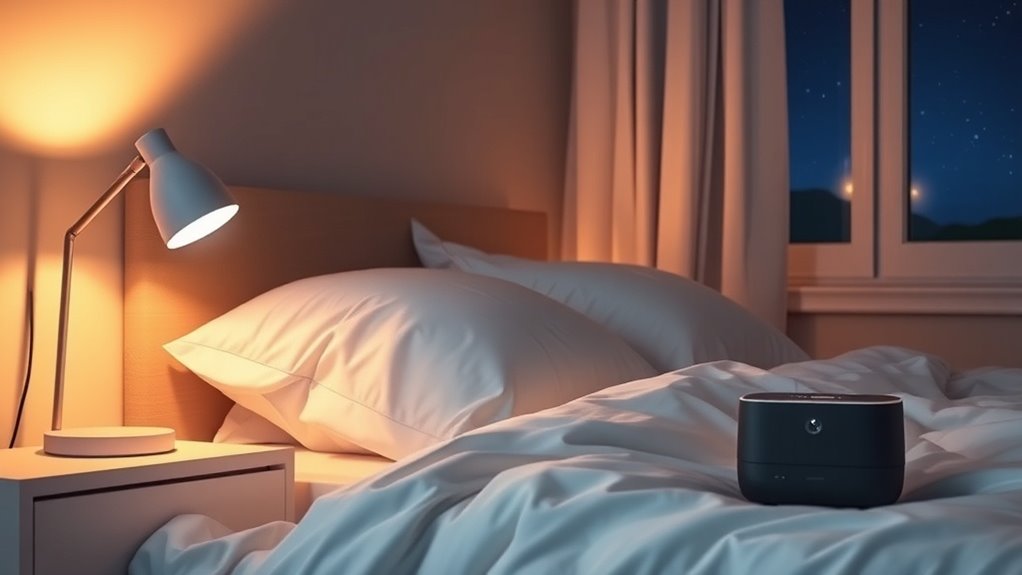
While many people believe that complete silence is ideal for sleep, research indicates that certain types of sound can actually enhance sleep quality. White noise, which provides a consistent auditory backdrop, helps mask disruptive sounds such as traffic or voices, promoting a more stable sleep environment. Ambient sounds—like gentle rain, ocean waves, or rustling leaves—can also facilitate relaxation by creating a calming auditory landscape. Studies demonstrate that these sounds can decrease sleep onset latency and improve sleep continuity by reducing cortical arousal. The predictable nature of white noise and ambient sounds prevents abrupt auditory disruptions that may wake you, reinforcing deeper sleep stages. Furthermore, these sounds can condition your brain to associate them with sleep, fostering a relaxing bedtime routine. Understanding the impact of sound on sleep underscores the importance of controlled auditory environments, especially for those struggling with environmental noise or sleep disturbances.
Choosing the Right Sleep Sounds and Noises
Selecting the appropriate sleep sounds depends on individual preferences and specific sleep challenges, as evidence shows that not all auditory stimuli are equally effective for everyone. Nature sounds, such as flowing water or rustling leaves, often promote relaxation by mimicking natural environments known to reduce stress. Conversely, white noise produces a consistent, unobtrusive sound that can mask disruptive environmental noises, helping to sustain uninterrupted sleep. Research indicates that white noise can be particularly effective for those with light or fragmented sleep, as it creates a steady auditory backdrop that minimizes sudden disturbances. When choosing between nature sounds and white noise, consider personal preference and the primary sleep disturbance. Some individuals find nature sounds calming and grounding, while others benefit from the neutrality of white noise. Ultimately, selecting sounds that evoke comfort and minimize disruptions can considerably improve sleep quality, supported by empirical findings on auditory stimuli and sleep.
Setting Up a Comfortable Sound Environment
Creating a comfortable sound environment for sleep involves carefully positioning your audio devices and controlling ambient noise levels to guarantee ideal relaxation. To minimize disruptions, consider using a white noise machine, which has been shown to mask disruptive sounds and promote sleep continuity. Place your device strategically—away from your pillow but close enough to generate consistent sound. Using blackout curtains can also reduce outside noise and light, creating a more serene environment.
| Placement Tip | Purpose |
|---|---|
| Near the head of the bed | Ensures even sound distribution for effective masking |
| Away from electronics | Prevents interference and unwanted noise |
| At ear level or slightly above | Maximizes sound clarity and comfort |
| Use soundproofing materials | Further reduces external noise |
| Combine with blackout curtains | Enhances overall quietness and darkness |
This setup fosters a tranquil environment, essential for restorative sleep.
The Role of Light in Regulating Sleep Cycles
Light exposure plays a pivotal role in regulating your body’s internal clock, known as the circadian rhythm, which governs your sleep-wake cycles. Natural light cues help synchronize this rhythm, signaling when it’s time to be awake or asleep. When you’re exposed to bright light during the day, it suppresses melatonin production, keeping you alert and awake. Conversely, reduced light in the evening prompts an increase in melatonin, the hormone responsible for signaling sleep readiness. Disruptions in light exposure—such as artificial light from screens—can delay melatonin production, leading to difficulty falling asleep or fragmented sleep. Proper light management supports your circadian rhythm, ensuring ideal melatonin levels at night. This balance is essential for restorative sleep and overall health. Understanding how light influences your internal clock empowers you to optimize your environment, promoting better sleep quality through natural light cues.
Selecting Effective Lighting for Better Rest
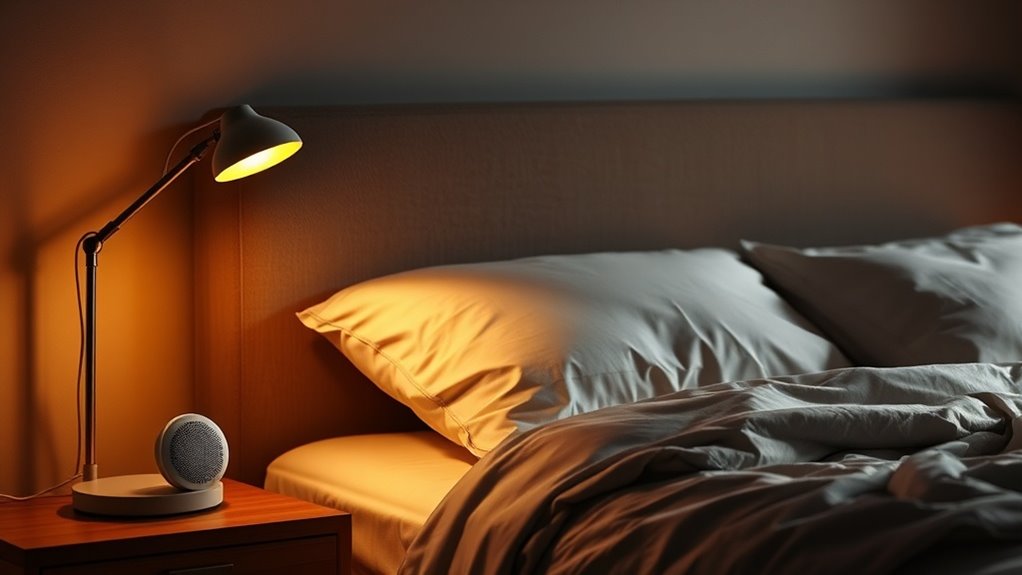
Selecting the right lighting can critically improve your sleep quality, as evidence shows that warm, dim lighting promotes melatonin production. Installing dimmer switches allows you to gradually reduce light intensity in the evening, supporting your circadian rhythm. Additionally, avoiding blue light from screens before bed is essential, since it suppresses melatonin and delays sleep onset.
Choose Warm Light Colors
Choosing warm light colors, such as soft amber or gentle orange hues, can substantially enhance your ability to wind down before bed. Research indicates that warm hues promote relaxation by mimicking natural sunset lighting, which signals your body to prepare for sleep. These hues reduce exposure to blue light, which suppresses melatonin production, thereby supporting your circadian rhythm. Incorporating soothing melodies alongside warm lighting creates a calming environment that facilitates shift into rest. When selecting lighting, opt for fixtures that emit a gentle, amber glow, avoiding bright or cool-toned lights. This combination of warm hues and gentle sounds can lower stress levels and help your mind and body unwind, making it easier to fall asleep and improve sleep quality overall.
Dimmer Switch Benefits
Incorporating a dimmer switch into your bedroom lighting setup can markedly enhance your ability to shift smoothly into sleep. The primary dimmer switch benefits include creating an environment with adjustable lighting that mimics natural dusk, signaling your body to prepare for rest. This controlled lighting reduces melatonin suppression caused by bright light exposure. With adjustable lighting, you can gradually lower brightness levels as bedtime approaches, promoting relaxation and circadian rhythm alignment. Additionally, dimmer switches can help prevent overstimulation and provide personalized comfort. They enable you to set the perfect ambiance for winding down, reading, or relaxing without abrupt lighting changes. Overall, integrating a dimmer switch supports a sleep-friendly environment by allowing precise control over lighting intensity, which is essential for ideal sleep hygiene.
Avoid Blue Light Before Bed
Since blue light emitted by screens and certain artificial lighting can substantially disrupt melatonin production, it’s essential to minimize your exposure in the hours leading up to sleep. Excessive screen time before bed delays melatonin release, leading to sleep disruption and reduced sleep quality. To counter this, consider using blue light filters or glasses, dimming lights, and avoiding screens at least an hour before bedtime. The table below outlines effective strategies:
| Strategy | Implementation | Expected Benefit |
|---|---|---|
| Use blue light filters | Activate on devices in evening | Less melatonin suppression |
| Switch to dim lighting | Replace bright lights with warm bulbs | Promote natural sleep cues |
| Limit screen time | Set a cut-off time an hour before bed | Minimize sleep disruption |
| Wear blue light glasses | During evening screen use | Protect melatonin production |
| Engage in relaxing activities | Read or meditate instead of screens | Support circadian rhythm |
Creating a Sleep-Friendly Bedroom Atmosphere
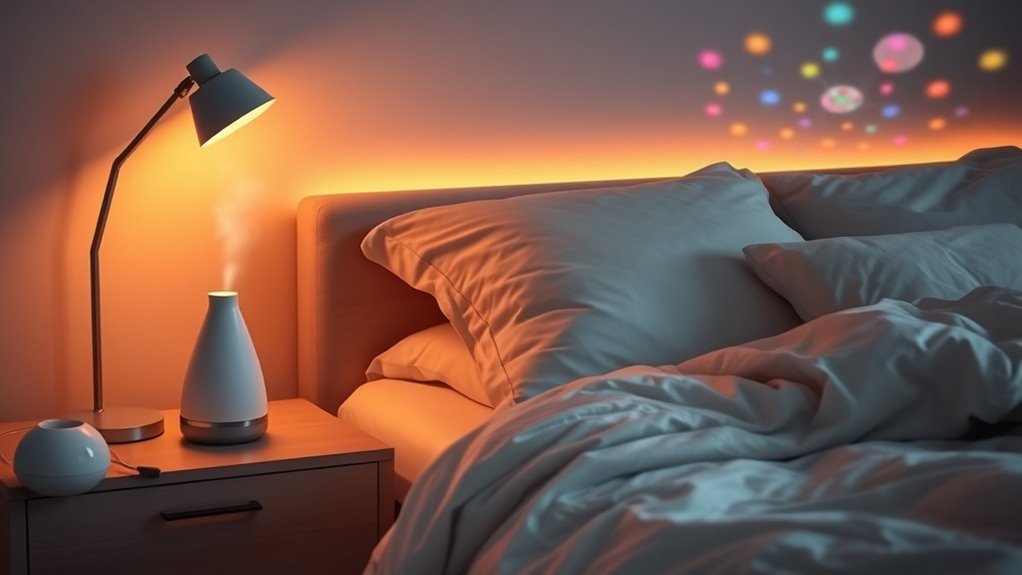
Creating an ideal bedroom environment involves controlling lighting conditions to promote melatonin production and minimizing noise disruptions through effective soundproofing. Research shows that dim, warm lighting enhances sleep quality, while soundproofing strategies like sealing gaps and using white noise can markedly reduce sleep disturbances. Focusing on these elements can help establish a calm, restorative sleep atmosphere backed by scientific evidence.
Optimal Lighting Conditions
Achieving ideal lighting conditions is essential for establishing a sleep-friendly bedroom environment. Proper control of natural light and artificial lighting helps regulate your circadian rhythm, promoting better sleep quality. During the day, maximize natural light exposure to reinforce your body’s internal clock, but in the evening, minimize bright artificial lighting to signal winding down. Use blackout curtains or shades to block out excess light, and opt for warm, dimmable lights in the hours before bed. Avoid blue light-emitting screens close to bedtime, as they interfere with melatonin production. Creating a dark, softly lit space helps your body prepare for restful sleep.
- Use blackout curtains to block external light sources
- Switch to warm, low-intensity bulbs in the evening
- Limit the use of screens before bedtime
- Incorporate adjustable lighting to control brightness
Soundproofing Strategies
Reducing noise disturbances is a crucial step in establishing a sleep-friendly bedroom environment, as exposure to consistent, unwanted sounds can profoundly disrupt sleep cycles and diminish sleep quality. Implementing effective soundproofing strategies involves selecting appropriate soundproofing materials, such as mass-loaded vinyl or acoustic panels, to absorb or block noise. Installing noise barriers like double-glazed windows or weatherstripping around doors can markedly reduce external sound infiltration. Additionally, adding dense curtains or rugs can dampen sound reflections within the room. These measures create a quieter environment, minimizing disruptions and promoting uninterrupted sleep. Properly designed soundproofing setups not only improve sleep quality but also contribute to a calmer, more restful atmosphere, essential for restorative sleep and overall well-being.
Tips for Incorporating Sound and Light Into Your Bedtime Routine
Incorporating sound and light into your bedtime routine can considerably enhance sleep quality when done thoughtfully. Consistent use of calming sounds, such as white noise or gentle nature sounds, can reduce environmental disruptions and promote relaxation. Light exposure should be minimized in the hour before sleep; consider dimming lights or using blackout curtains to support melatonin production. Engaging in practices like dream journaling can help clear your mind, making it easier to settle into restful sleep. Also, your sleep position influences how sound and light impact you—finding a comfortable position can reduce disturbances.
Enhance sleep by minimizing light, using calming sounds, and maintaining a comfortable sleep position.
- Use a white noise machine or calming sound app to mask disruptive noises.
- Dim or eliminate bright lights at least 30 minutes before bed.
- Keep a consistent sleep position to minimize tossing and turning.
- Incorporate a brief relaxation routine, such as deep breathing, before sleep.
Common Questions
Can Sound and Light Therapy Replace Medical Treatment for Sleep Disorders?
Sound and light therapy aren’t typically replacements for medical treatment of sleep disorders, but they can be effective alternative therapies when combined with proper sleep environment adjustments. Evidence suggests they improve sleep quality by regulating circadian rhythms and reducing disturbances. However, if you have chronic or severe conditions like insomnia or sleep apnea, consulting a healthcare professional is essential, as therapy alone may not address underlying issues.
Are There Risks Associated With Using Sound and Light Devices Regularly?
There are some health implications and device safety concerns with regular use of sound and light devices. Overexposure to bright lights can disrupt your circadian rhythm, causing sleep issues, while loud sounds may lead to hearing damage or increased stress. It’s essential to verify devices are certified and used at recommended settings. Regular monitoring and consulting healthcare professionals can help minimize risks and ensure safe, effective use.
How Do Individual Preferences Influence Sound and Light Choices for Sleep?
Did you know that 20% of people have heightened sensory sensitivity, influencing their sleep choices? Your personal comfort greatly impacts whether you prefer soothing sounds or dim lighting. If you’re sensitive to noise or light, opting for gentle, consistent soundscapes and soft, warm lighting can improve sleep quality. Understanding your individual preferences helps tailor your environment, ensuring it promotes relaxation and minimizes disruptions, leading to more restorative sleep.
What Are the Best Practices for Timing Sound and Light Exposure Before Bed?
To optimize your sleep, focus on timing optimization of sound and light exposure within personalized routines. Aim for dim, warm lighting at least an hour before bed to signal melatonin production, and minimize screen time during this period. Incorporate calming sounds 30-60 minutes before sleep, gradually reducing volume. Consistency is key; aligning these cues with your natural circadian rhythms enhances sleep quality and overall restfulness.
Can Children and Elderly Benefit Equally From Sound and Light Sleep Aids?
Children and the elderly can both benefit from sound and light sleep aids, but age differences and sensory sensitivities influence effectiveness. Children often respond well to calming sounds and dim lighting, supporting natural sleep cycles, while seniors may experience heightened sensory sensitivities, requiring gentler stimuli. Evidence suggests personalized adjustments enhance benefits for each group. Always consider individual needs and consult healthcare providers to optimize sleep aid strategies for different age groups.