
Deep breathing before bedtime activates your relaxation response, lowers cortisol, and stimulates the vagus nerve, all of which contribute to improved sleep quality. By practicing slow, deliberate inhales and exhales, you help reduce sympathetic nervous system activity and physiological arousal. This calming physiological effect, supported by scientific research, can lead to deeper, more restful sleep. Continuing to explore these techniques can reveal how to optimize your nightly routine and enhance your overall well-being.
Key Takeaways
- Deep breathing activates the relaxation response, reducing stress hormones like cortisol to improve sleep quality.
- Practicing slow, mindful breaths before bed helps lower heart rate and blood pressure, promoting calmness.
- Combining deep breathing with mindfulness or aromatherapy enhances relaxation and eases the transition to sleep.
- Regular deep breathing routines support autonomic regulation, leading to longer-term sleep stability.
- Avoiding rushed or improper technique ensures maximum relaxation benefits from bedtime deep breathing sessions.
Understanding the Benefits of Deep Breathing for Sleep

Deep breathing before bedtime can considerably enhance sleep quality by activating the body’s relaxation response, which reduces sympathetic nervous system activity. This practice aligns with principles of mindfulness meditation, fostering present-moment awareness and calming mental activity. Improved sleep hygiene involves creating habits that promote restorative sleep, and deep breathing directly supports this by lowering cortisol levels and decreasing physiological arousal. Evidence indicates that slow, intentional breaths stimulate the vagus nerve, leading to decreased heart rate and blood pressure, facilitating easier sleep onset. Regular practice of deep breathing enhances autonomic regulation, offering long-term benefits for sleep stability. Integrating such techniques into a consistent bedtime routine can address common sleep disturbances linked to stress and anxiety. Overall, combining mindfulness meditation with good sleep hygiene practices through deep breathing offers a scientifically supported method to improve sleep quality, making it a valuable tool for those seeking natural, non-pharmacological solutions.
Step-by-Step Guide to Practicing Deep Breathing Before Bed
To effectively incorporate deep breathing into your bedtime routine, it’s helpful to follow a structured approach that maximizes its calming benefits. Begin by establishing a quiet, comfortable environment aligned with good sleep hygiene, free of distractions. Sit or lie down in a relaxed position. Focus on your breath, akin to mindfulness meditation, observing each inhale and exhale without judgment. Inhale slowly through your nose for a count of four, then hold briefly before exhaling through your mouth or nose for a similar count. Repeat this cycle for 5-10 minutes, maintaining a steady rhythm. Consistency enhances the autonomic nervous system’s response, reducing sympathetic activation and promoting relaxation conducive to sleep. This practice not only calms the mind but also reinforces sleep hygiene habits, signaling to your body that it’s time to wind down. Over time, this structured deep breathing routine can markedly improve sleep onset and quality.
Techniques to Enhance Your Relaxation and Calmness
Incorporating additional relaxation techniques alongside deep breathing can considerably enhance your sense of calm and prepare your mind for restful sleep. Techniques like mindfulness meditation help anchor your awareness in the present moment, reducing racing thoughts and physiological arousal. Aromatherapy relaxation, using scents such as lavender or chamomile, has demonstrated evidence-based benefits in lowering cortisol levels and promoting sleep onset. Combining these methods creates a synergistic effect, deepening your relaxation response.
| Technique | Emotional Benefit |
|---|---|
| Mindfulness meditation | Cultivates mental clarity and reduces stress |
| Aromatherapy relaxation | Evokes tranquility, easing tension |
| Gentle stretching | Releases muscle tightness, fostering calm |
Engaging in these practices before bed can foster a more profound state of relaxation, making it easier to shift into restorative sleep. Tailoring your routine with evidence-backed techniques enhances overall sleep quality and emotional well-being.
Common Mistakes to Avoid During Your Breathing Routine
While deep breathing can effectively promote relaxation, certain common mistakes can undermine its benefits and hinder your progress. One frequent error is poor breathing posture; slouching or tension in your shoulders can restrict diaphragmatic movement, reducing oxygen intake and relaxation. Maintaining an upright, relaxed posture with shoulders back facilitates ideal breath flow. Additionally, many individuals either rush through their sessions or extend them excessively; both extremes impair effectiveness. Short sessions may be insufficient to induce calm, while overly long ones can lead to fatigue or distraction, decreasing focus. It’s vital to find a balanced session duration—typically 5 to 10 minutes—and stick to it consistently. Ignoring these factors can diminish the calming effects of deep breathing, making it less effective as a pre-sleep ritual. Mindful attention to your breathing posture and appropriate session length ensures you maximize relaxation and reap the full benefits of your routine.
Incorporating Deep Breathing Into Your Nightly Sleep Ritual
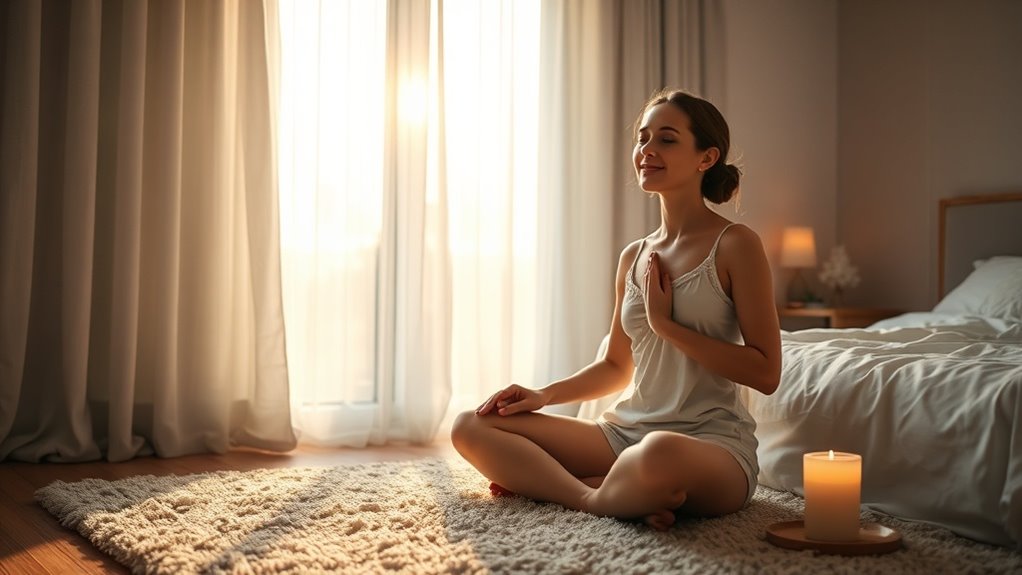
Building a consistent deep breathing routine as part of your nightly sleep ritual can substantially enhance your ability to relax and fall asleep more quickly. Integrating this practice into your sleep hygiene promotes parasympathetic nervous system activation, reducing stress and physiological arousal. To optimize effectiveness, combine deep breathing with mindfulness meditation techniques, focusing your attention on breath sensations to cultivate present-moment awareness. Establish a dedicated, calming environment free of distractions to reinforce the habit. Consistency is key; perform your routine at the same time each night to signal your body that it’s time to wind down. Scientific studies support that regular deep breathing reduces cortisol levels and improves sleep quality. By embedding these practices into your nightly routine, you create a structured approach that facilitates relaxation, enhances sleep onset, and fosters overall sleep health. This integration leverages behavioral conditioning to improve sleep hygiene systematically.
Common Questions
Can Deep Breathing Replace Medical Treatments for Sleep Disorders?
Deep breathing alone can’t replace medical treatments for sleep disorders, but it offers significant relaxation benefits. Meditation benefits include reducing stress and promoting calmness, which may improve sleep quality. Relaxation techniques like deep breathing can be effective adjuncts, especially for mild issues. However, for diagnosed sleep disorders, consulting healthcare professionals remains essential. Combining these techniques with medical advice can enhance overall sleep health, but they shouldn’t be seen as sole solutions.
How Long Should Each Deep Breathing Session Last for Optimal Results?
Think of your breathing as a gentle tide—calm, steady, and purposeful. For ideal results, aim for a session length of 10 to 15 minutes, allowing your breath to settle into a rhythm that signals relaxation. Shorter sessions may be less effective, while longer ones could cause fatigue. Consistency in breathing duration enhances its calming effect, helping to reduce stress and improve sleep quality through precise, evidence-based breathing duration.
Is Deep Breathing Effective for Everyone Regardless of Age or Health Condition?
Deep breathing can be effective for most people, but age appropriateness and health considerations matter. If you’re young and healthy, it’s generally safe and beneficial. However, older adults or individuals with respiratory or cardiovascular issues should consult a healthcare professional before starting, as certain conditions may require tailored approaches. Evidence shows deep breathing reduces stress and improves sleep, but individual health status influences its effectiveness.
Should I Practice Deep Breathing if I Have Respiratory Issues or Asthma?
If you have respiratory issues or asthma, you should consult your healthcare provider before practicing deep breathing. While controlled breathing can aid asthma management and promote relaxation, improper techniques might jeopardize respiratory safety. Evidence suggests that tailored, supervised breathing exercises can be beneficial, but self-directed practice without medical guidance could pose risks. Always prioritize professional advice to ensure safe, effective incorporation into your respiratory health routine.
Can Deep Breathing Help With Insomnia Caused by Anxiety or Stress?
Absolutely, deep breathing can be your secret weapon against insomnia driven by anxiety or stress. It’s a scientifically backed relaxation technique that activates your parasympathetic nervous system, reducing cortisol levels and promoting calm. By incorporating these stress reduction methods into your nightly routine, you’re more likely to fall asleep faster and enjoy restorative sleep. So, breathe deeply, relax, and let science do its magic—because who needs sleep when you’ve got stress?