
Understanding the psychology of relaxation before sleep involves recognizing how your thoughts, emotions, and habits influence your ability to unwind. Stress and anxiety activate your fight-or-flight response, making it hard to quiet your mind. Creating calming routines, such as mindful meditation or aromatherapy, helps reframe your mental state and signals your body it’s time to relax. Addressing subconscious patterns and establishing consistent habits can make restful sleep more accessible — explore how these strategies can work for you.
Key Takeaways
- Relaxation techniques like deep breathing and mindfulness activate the parasympathetic nervous system, reducing stress and preparing the mind for sleep.
- Addressing subconscious emotions through dream analysis can alleviate mental tension hindering relaxation.
- Establishing calming bedtime routines and environment reinforces sleep cues and reduces psychological barriers to rest.
- Managing mental clutter and racing thoughts via journaling or aromatherapy helps create a peaceful mental state before sleep.
- Recognizing and restructuring negative sleep perceptions prevents anxiety-driven sleep difficulties and promotes emotional well-being.
Understanding the Mind-Body Connection in Sleep

Understanding the mind-body connection in sleep reveals how your mental state directly influences your physical rest and overall well-being. When you reflect on dream analysis, you begin to recognize how subconscious patterns shape your nightly experiences. Dreams often serve as windows into unresolved emotions and underlying beliefs, revealing stressors or fears that may disrupt your sleep cycle. By analyzing recurring themes or symbols, you can identify underlying issues affecting your relaxation. This awareness allows you to address emotional conflicts that might otherwise manifest as sleep disturbances. Recognizing these subconscious patterns emphasizes the importance of mental health in achieving restorative sleep. The more you understand how your thoughts and feelings influence your physical state, the better you can create a calming pre-sleep routine. Ultimately, this connection underscores that nurturing your mental wellness is essential for deep, uninterrupted rest and overall vigor.
How Stress and Anxiety Impact Relaxation
Have you ever noticed how stress and anxiety seem to tighten your muscles and cloud your mind, making it difficult to unwind? When stress levels are high, your body’s fight-or-flight response activates, releasing cortisol and adrenaline that hinder relaxation and disrupt sleep patterns. This heightened state can lead to racing thoughts and difficulty quieting your mind. Techniques like dream journaling can help process unresolved worries, reducing anxiety’s grip before bed. Additionally, aromatherapy benefits—such as lavender or chamomile—are supported by research showing they promote relaxation by affecting the limbic system, calming your nervous system. Recognizing how stress impairs relaxation allows you to take targeted steps to counteract it, creating a more peaceful progression to sleep. By integrating practices like dream journaling and aromatherapy, you can better manage stress and cultivate a mental environment conducive to relaxation, ultimately improving your sleep quality.
The Role of Circadian Rhythms in Winding Down
Your body’s internal clock relies heavily on light exposure to regulate melatonin production, which signals your body that it’s time to wind down. The timing of sleep hormones like melatonin is closely aligned with your circadian rhythms, making consistency essential. Establishing regular bedtime cues can reinforce these natural patterns, easing your shift into restful sleep.
Light’s Impact on Melatonin
Light plays a crucial role in regulating melatonin production, which is essential for your body’s natural sleep-wake cycle. Exposure to blue light, especially in the evening, can suppress the release of sleep hormones like melatonin, making it harder for you to wind down. This disruption occurs because blue light signals your brain that it’s still daytime, delaying the circadian rhythm’s shift toward sleep readiness. Understanding this impact helps you realize why reducing screen time before bed can improve sleep quality. By limiting blue light exposure, you support your body’s natural melatonin levels, promoting a smoother transition into restful sleep. Recognizing how light influences your internal clock empowers you to make conscious choices that enhance relaxation and support healthy sleep patterns.
Timing of Sleep Hormones
Since your body’s internal clock, known as the circadian rhythm, naturally guides the timing of hormone production, understanding this process can help you optimize your sleep-wake cycle. Melatonin timing is vital for sleep hormone regulation, as it peaks in the evening to signal your body it’s time to wind down. Disruptions to this rhythm—due to irregular schedules or light exposure—can delay melatonin release, making it harder to fall asleep. By aligning your activities with your circadian cues, you support the natural rise and fall of sleep hormones, promoting smoother shifts into sleep. Recognizing this timing helps you create environments and routines that reinforce your body’s internal clock, fostering a more restful, restorative sleep experience.
Consistent Bedtime Cues
Establishing consistent bedtime cues is essential because it helps reinforce your circadian rhythms, signaling to your body when it’s time to wind down and prepare for sleep. Regular routines, like reading bedtime stories or using soothing scents, create reliable signals that cue your brain to shift into rest. These cues activate neural pathways associated with relaxation, making the shift from wakefulness smoother. Evidence suggests that maintaining consistent pre-sleep activities strengthens your internal clock, reducing sleep onset latency and improving sleep quality. By integrating calming rituals—such as dimming lights, listening to gentle music, or inhaling calming aromas—you condition your body to recognize it’s time to relax. Over time, these cues become powerful tools, fostering a sense of predictability and security that supports your natural sleep-wake cycle.
Common Psychological Barriers to Sleep
Many people find that stress and racing thoughts make it hard to relax at night, often keeping the mind active when it should be winding down. Anxiety and overthinking can intensify these difficulties, creating a cycle that hampers sleep quality. Additionally, negative sleep associations—such as feeling anxious in bed—can reinforce these barriers, making restful sleep increasingly elusive.
Stress and Racing Thoughts
Stress and racing thoughts are among the most common psychological barriers to falling asleep, often creating a cycle that perpetuates difficulty relaxing. When your mind is overwhelmed, it’s hard to switch into rest. Techniques like dream journaling can help by externalizing thoughts, reducing mental clutter. Aromatherapy benefits, such as lavender, may also promote calming sensations, easing your mind before bed. To visualize this, consider the following:
| Cause | Effect | Remedy |
|---|---|---|
| Overthinking | Increased stress and agitation | Dream journaling to process thoughts |
| Anxiety | Racing mind inhibits sleep | Aromatherapy benefits for relaxation |
| Stress accumulation | Sleep onset delays | Mindfulness and calming routines |
Understanding these patterns enables targeted strategies, fostering a more peaceful transition into sleep.
Anxiety and Overthinking
Anxiety and overthinking often intensify the difficulty of falling asleep, creating a mental barrier that keeps your mind active when it should be winding down. Racing thoughts can lead to a cycle of worry, making it hard to shift into restful sleep. Techniques like dream journaling can help externalize your thoughts, reducing their grip on your mind and promoting anxiety reduction. By writing down your worries or positive reflections before bed, you create a mental space that fosters calmness. This process not only clears mental clutter but also encourages a more relaxed state, easing the transition to sleep. Recognizing these patterns and actively addressing them can transform bedtime into a more peaceful, restorative experience.
Negative Sleep Associations
Negative sleep associations occur when your mind links the act of falling asleep with distressing or unpleasant stimuli, making it harder to relax and drift off naturally. These associations, often rooted in negative dream associations or intrusive thoughts, serve as sleep triggers that reinforce anxious or arousing feelings. For example, you might associate your bed with stressful thoughts about work, or your mind may link quiet moments with unsettling dreams. This creates a cycle where the act of trying to sleep becomes anxiety-provoking. Addressing these associations involves recognizing and restructuring negative perceptions, replacing them with calming routines, and fostering positive dream associations. Understanding these patterns can help you break the cycle, making restful sleep more accessible and less emotionally taxing.
Techniques to Promote Mental Calmness
To foster mental calmness before sleep, incorporating specific relaxation techniques can be highly effective. Practices like dream journaling help process emotions, reducing nighttime rumination. Aromatherapy benefits, especially calming scents like lavender or chamomile, can lower cortisol levels and promote relaxation. Combining these methods creates a holistic approach to mental calmness.
| Technique | Purpose | Evidence Base |
|---|---|---|
| Dream Journaling | Clears the mind, reduces anxiety | Enhances emotional processing |
| Aromatherapy Benefits | Induces relaxation, decreases stress | Supports parasympathetic response |
| Mindfulness Meditation | Focuses attention, alleviates racing thoughts | Improves sleep onset |
| Deep Breathing | Calms nervous system, reduces heart rate | Proven to activate relaxation response |
The Influence of Habits and Routines on Sleep Quality
Establishing consistent habits and routines before bed can profoundly influence sleep quality, often amplifying the benefits of relaxation techniques. Good sleep hygiene isn’t just about avoiding screens; it’s about creating a predictable environment that signals your body it’s time to wind down. Routines help regulate your circadian rhythms, leading to more restful sleep. Consider these key elements:
- Going to bed and waking up at the same time daily.
- Engaging in relaxing activities like reading or gentle stretches.
- Avoiding caffeine, heavy meals, and screens close to bedtime.
- Creating a calming environment—dim lighting and comfortable bedding.
The Power of Mindfulness and Meditation Before Bed
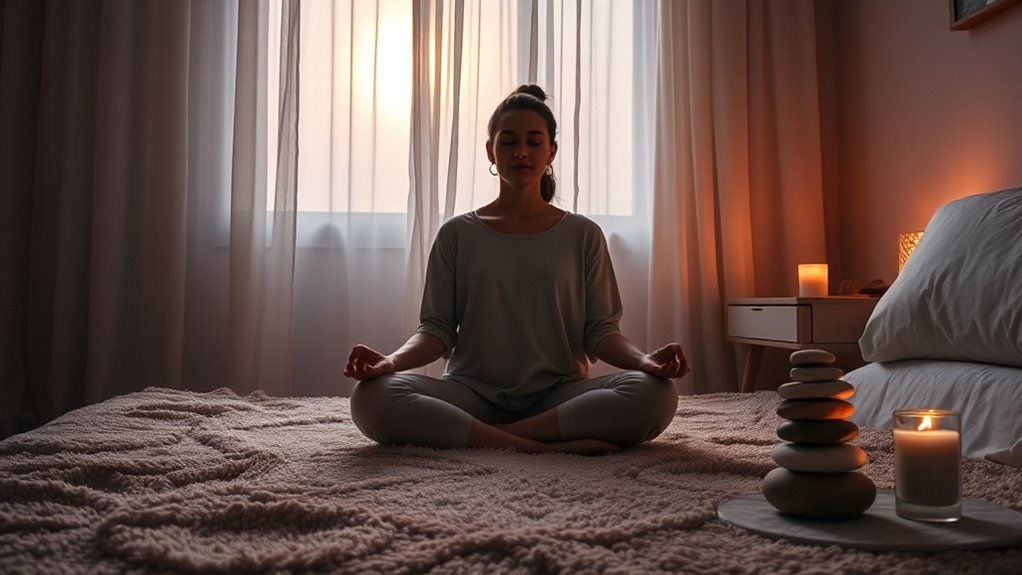
Mindfulness and meditation have gained recognition as powerful tools for enhancing sleep quality because they help calm the mind and reduce stress—two major barriers to restful sleep. Engaging in breathing exercises can activate the parasympathetic nervous system, promoting relaxation and slowing your heart rate. A body scan, another effective technique, involves systematically bringing awareness to different parts of your body, releasing tension as you go. These practices foster a present-centered focus, helping you detach from racing thoughts or worries that often hinder sleep onset. Scientific studies support that regular mindfulness meditation can decrease sleep latency and improve sleep efficiency. By incorporating short sessions before bed, you create a mental environment conducive to restful sleep. The empathetic understanding behind these techniques recognizes that easing mental clutter is vital; therefore, mindfulness and meditation empower you to shift seamlessly from wakefulness to sleep, breaking the cycle of stress-induced insomnia.
Creating an Environment Conducive to Relaxation
Creating an environment that promotes relaxation is essential for shifting smoothly into sleep, as your surroundings can especially influence your ability to unwind. A thoughtfully arranged space reduces stress and signals to your brain that rest is imminent. Consider these elements:
- Use a calming bedroom scent, such as lavender or chamomile, which research links to decreased anxiety and better sleep quality.
- Opt for sleep-friendly furniture that’s comfortable, supportive, and free of clutter to foster physical relaxation.
- Dim the lighting or use soft, warm lamps to promote melatonin production.
- Keep electronic devices away or on night mode, minimizing blue light exposure that can disrupt your circadian rhythm.
Practical Tips for Developing a Tranquil Pre-Sleep Ritual
After optimizing your environment to encourage relaxation, the next step is to develop a pre-sleep ritual that signals to your body it’s time to wind down. Consistency is key; engaging in calming activities helps condition your mind for sleep. Consider incorporating dream journaling into your routine—writing briefly about your dreams or worries can reduce rumination and promote mental clarity. Additionally, using aromatherapy scents like lavender or chamomile can evoke relaxation, supported by research linking certain aromas to decreased heart rate and anxiety. Creating a consistent sequence—such as dimming lights, practicing gentle stretching, or listening to soothing music—reinforces your body’s association between these cues and sleep readiness. The goal is to establish a routine that is both calming and predictable, helping your nervous system shift into a relaxed state. Over time, these rituals can enhance sleep quality by reducing bedtime stress and fostering a tranquil mindset.
Common Questions
How Does Relaxation Before Sleep Affect Overall Mental Health?
Relaxation before sleep considerably boosts your mental health by enhancing stress management and emotional regulation. When you wind down, your brain reduces cortisol levels, helping you handle daily stress better. This calming practice promotes emotional stability, lowering anxiety and depression risks. Consistently relaxing before sleep creates a positive feedback loop, strengthening mental resilience and fostering overall well-being. It’s a simple yet powerful habit to support your emotional health long-term.
Can Dietary Choices Influence Pre-Sleep Relaxation?
Your dietary choices can significantly influence pre-sleep relaxation, like tuning a delicate instrument. Consuming nutrient-rich foods with good food quality and mindful nutritional timing—avoiding heavy meals close to bedtime—can promote calming effects and better sleep. Evidence suggests that foods high in magnesium, tryptophan, or melatonin support relaxation. By making thoughtful choices, you create a peaceful mental state, easing your passage into restful sleep and improving overall well-being.
What Role Do Sensory Stimuli Play in Calming the Mind?
Sensory stimuli play a vital role in calming your mind through sensory integration, which helps reduce stress and promote relaxation. Calming aromas like lavender or chamomile activate the limbic system, easing anxiety and preparing you for sleep. Evidence shows that consistent exposure to soothing scents and gentle sensory inputs can enhance your ability to shift into restful sleep, making your pre-sleep routine more effective and emotionally comforting.
How Does Technology Use Impact Pre-Sleep Relaxation?
Technology use, especially screen time and social media, can considerably hinder your pre-sleep relaxation. The blue light emitted from screens suppresses melatonin, making it harder to fall asleep. Social media often keeps your mind active and engaged, increasing stress or anxiety. To improve sleep quality, try reducing screen time before bed and engage in calming activities like reading or gentle stretching, which promote mental calmness and facilitate a smoother shift into sleep.
Are There Age Differences in Effective Relaxation Techniques?
Age differences in effective relaxation techniques are like different keys fitting unique locks, shaped by developmental differences. As you age, your relaxation needs evolve—what calms a child may not soothe an adult. Younger individuals often benefit from playful, sensory activities, while older adults might prefer mindfulness or gentle stretches. Recognizing these age-specific relaxation strategies helps tailor approaches, ensuring better sleep quality across every stage of life.