
After a stressful day, focus on calming your mind by practicing deep breathing or meditation, which activates relaxation responses. Spend time outdoors or take a gentle walk to help lower cortisol levels and clear your thoughts. Engaging in physical activity releases mood-boosting endorphins, while disconnecting from screens reduces overstimulation. Ultimately, indulging in a creative hobby can offer emotional relief and foster resilience. Keep exploring these strategies to find the best ways to restore your mental well-being.
Key Takeaways
- Practice deep breathing or meditation to activate relaxation responses and increase present-moment awareness.
- Take a walk outdoors to reduce cortisol and boost mental clarity through nature’s restorative effects.
- Engage in physical activity to release endorphins and improve mood after a stressful day.
- Disconnect from screens and social media to lower overstimulation and foster genuine relaxation.
- Pursue a creative hobby like painting or journaling to express emotions and promote mental calmness.
Practice Deep Breathing or Meditation
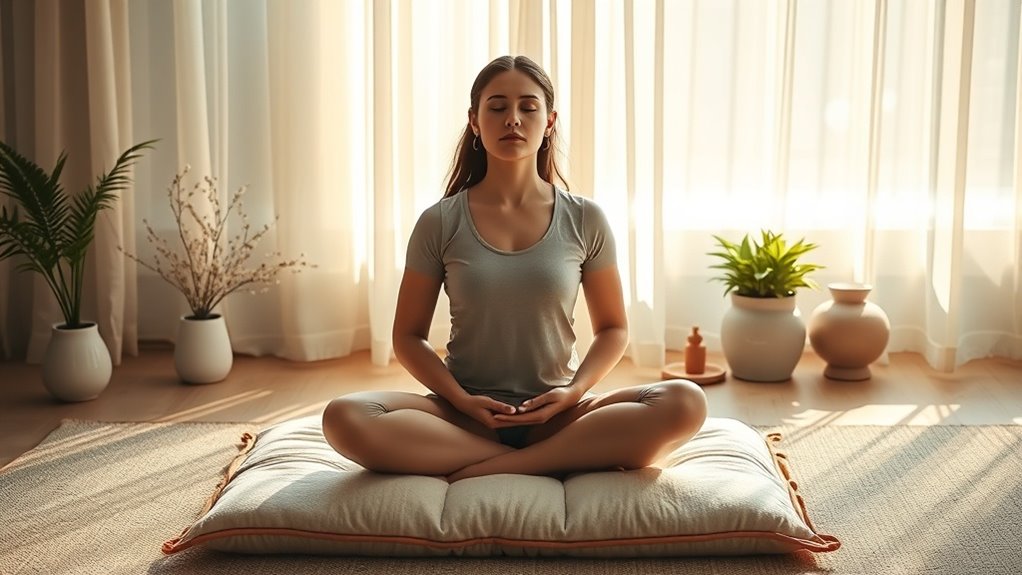
When you’ve had a stressful day, taking a few moments to practice deep breathing or meditation can make a significant difference. These calming techniques help activate your parasympathetic nervous system, reducing stress hormones and promoting relaxation. Mindfulness exercises, such as focusing on your breath or observing sensations without judgment, are especially effective. To start, find a quiet space, sit comfortably, and take slow, deep breaths—inhale for four seconds, hold briefly, then exhale slowly. Repeat this process for several minutes. Meditation can involve guided sessions or simply paying attention to your breathing or bodily sensations. These practices not only calm your mind but also enhance your awareness of present moment experiences, helping you detach from stressors. Incorporating deep breathing and mindfulness exercises into your routine can provide immediate relief and build resilience against future stress. Consistency is key for lasting mental recovery.
Take a Nature Walk or Spend Time Outdoors
Spending time outdoors or taking a walk in nature can be a powerful way to reset your mind after a stressful day. Immersing yourself in natural settings, like forests or parks, leverages forest therapy principles that reduce cortisol and promote relaxation. Consider these options:
Spending time outdoors in nature helps reduce stress and promotes relaxation through forest therapy principles.
- Go for a gentle walk through a nearby trail or green space.
- Practice outdoor journaling to reflect on your feelings while immersed in nature.
- Observe the sights and sounds around you—birds, rustling leaves, or flowing water—to ground your thoughts.
- Spend time in silence or mindfulness to fully absorb the calming environment.
Research shows that outdoor activity decreases stress levels and enhances mood. Connecting with nature can boost mental clarity, foster emotional resilience, and provide a restorative break from daily pressures. So, step outside, breathe deeply, and let nature work its healing magic.
Engage in Physical Activity or Exercise
Engaging in physical activity or exercise can be an effective way to clear your mind after a stressful day, as movement releases endorphins that boost your mood and reduce tension. You might consider incorporating stretching routines to relax tense muscles and promote flexibility, helping you unwind gradually. If you prefer more intensity, a gym workout can elevate your heart rate and distract your mind from stressors. Even a short session—like brisk walking, cycling, or bodyweight exercises—can make a significant difference in how you feel. Exercise not only alleviates mental fatigue but also fosters a sense of accomplishment, reinforcing positive emotions. Remember to choose activities you enjoy, ensuring consistency and making it easier to turn exercise into a healthy habit. By moving your body intentionally, you give yourself a powerful tool to recover mentally and restore calm after a demanding day.
Disconnect From Screens and Social Media
After a day of physical activity, your mind still benefits from a break that doesn’t involve screens. A digital detox or social media break can substantially reduce stress and improve mental clarity. Here are four ways to disconnect effectively:
- Leave your devices in another room to avoid temptation.
- Choose outdoor activities like a walk or gardening to reset your mind.
- Practice mindfulness or meditation without digital distractions.
- Read a physical book or journal your thoughts instead of scrolling.
Breaking free from screens helps lower cortisol levels and reduces overstimulation. When you disconnect, you give your brain space to process emotions and recharge. Remember, even a short break from social media can lessen feelings of anxiety and comparison. Prioritizing screen-free moments promotes better sleep, enhances mood, and fosters genuine connections. Incorporating these simple steps into your routine creates a healthier mental space after stressful days.
Indulge in a Creative or Relaxing Hobby

When your mind feels overwhelmed after a stressful day, turning to a creative or relaxing hobby can be a soothing way to unwind. Engaging in activities like a colorful painting allows you to express emotions visually, reducing stress and promoting mindfulness. As you focus on brushstrokes and color combinations, your mind shifts away from worries. Pairing this with soothing music can enhance relaxation, calming your nervous system and lowering cortisol levels. These hobbies provide a mental escape, helping you reconnect with yourself and regain balance. Research shows that creative outlets decrease anxiety and improve mood, making them effective tools for stress recovery. Whether it’s creating art or simply listening to calming melodies, dedicating time to hobbies fosters emotional resilience. Incorporating these activities into your routine can turn stressful moments into opportunities for self-care and relaxation, helping you recharge mentally for the days ahead.
Common Questions
How Long Does It Typically Take to Feel Fully Relaxed After These Activities?
The time to feel fully relaxed varies, but typically, activities like deep breathing or meditation can lead to relaxation within 10-20 minutes. Exercise might take longer, around 30 minutes to an hour, depending on intensity. The effectiveness of each activity influences relaxation duration; consistent practice generally results in quicker, more sustained relief. Remember, everyone’s response is different, so give yourself patience and time to truly unwind.
Can These Methods Help With Ongoing Anxiety or Depression?
They say, “Time heals all wounds,” but for ongoing anxiety or depression, these methods can also build emotional resilience over time. While short-term relaxation techniques may provide temporary relief, consistent practice offers long-term benefits by strengthening your mental health. Evidence suggests that combining these approaches with professional support can improve your emotional stability, helping you manage persistent feelings better. Patience and persistence are key to true healing.
Are There Any Activities to Avoid After a Stressful Day?
You should avoid alcohol and overexerting yourself with intense exercise after a stressful day. Alcohol can worsen your mood and interfere with sleep, while overexertion may leave you physically drained and mentally overwhelmed. Instead, opt for gentle activities like deep breathing, stretching, or listening to calming music. These approaches support your recovery, helping you relax without adding extra stress or negative effects.
How Often Should I Practice These Recovery Techniques?
You should practice recovery techniques with consistency, ideally daily or as often as needed to feel mentally refreshed. The key is to find a personalized approach that fits your schedule and preferences, ensuring sustainability. Regular practice helps build resilience over time, reducing stress impact. Listen to your body and mind, adjusting frequency as you notice improvements, and remember that small, consistent efforts often yield lasting benefits.
Do These Strategies Work Equally Well for Everyone?
Think of Sarah, who finds meditation calming, but her friend prefers a quick walk. Recovery strategies vary because personal preferences and cultural differences influence what works best. Evidence shows that some techniques may be more effective for certain individuals, but no single method suits everyone. You might need to try different approaches to discover what helps you reset best after a stressful day, respecting your unique background and needs.