
Overstimulation from screens, noise, or mental activity suppresses melatonin, the hormone that signals your body it’s time to sleep. It also raises your heart rate and body temperature, making it harder to relax and fall asleep. Stress and sensory overload activate your nervous system’s fight-or-flight response, prolonging wakefulness and fragmenting sleep cycles. If you want to understand how to reduce these effects and improve your sleep quality, there’s more to discover below.
Key Takeaways
- Overstimulation suppresses melatonin production, delaying sleep onset and fragmenting sleep cycles.
- Excess sensory input activates the sympathetic nervous system, increasing heart rate and body temperature, hindering relaxation.
- Mental overload and racing thoughts elevate cortisol levels, making it harder to fall asleep and reducing sleep quality.
- Digital stimuli and bright screens before bed inhibit melatonin and disrupt REM sleep patterns.
- Elevated arousal from overstimulation creates a feedback loop that prolongs sleep onset and decreases sleep restorative stages.
The Impact of Blue Light on Melatonin Production
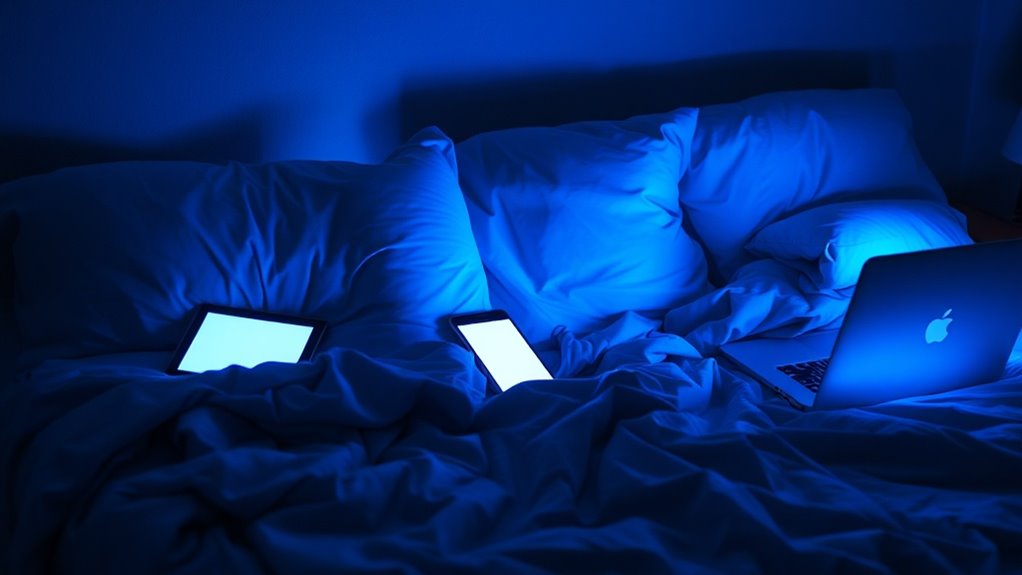
Since blue light exposure before bedtime can substantially interfere with your body’s natural sleep processes, understanding its impact on melatonin production is essential. Blue light, a component of light pollution from screens and outdoor sources, suppresses melatonin, the hormone responsible for signaling sleep onset. Extended screen time before bed exposes you to high levels of blue light, which inhibits melatonin synthesis in the pineal gland. This suppression delays sleep onset, reduces sleep quality, and fragments sleep cycles. Evidence indicates that even short-term exposure can considerably diminish melatonin levels, leading to difficulty falling asleep and poorer sleep architecture. As light pollution increases globally, more individuals are exposed to artificial blue light during evening hours, exacerbating sleep disturbances. Managing screen time in the hours before sleep and reducing exposure to ambient light pollution are critical strategies to preserve natural melatonin production and promote healthier sleep patterns.
How Mental Stimulation Disrupts Relaxation
Mental stimulation in the hours leading up to sleep can considerably disrupt your ability to relax, as heightened cognitive activity activates the sympathetic nervous system, which counteracts the body’s natural shift into rest. Engaging in mentally demanding tasks, such as intense problem-solving or emotional debates, increases alertness and sustains cortical activity, making it difficult to transition into sleep. Incorporating mindfulness exercises and calming routines can mitigate this effect by promoting parasympathetic activation, which supports relaxation. Techniques like deep breathing, progressive muscle relaxation, or guided imagery help slow neural activity and reduce mental arousal. Research indicates that consistent practice of such routines before bedtime substantially improves sleep onset and quality by decreasing cognitive hyperactivity. Avoiding stimulating activities, especially those involving screens or high cognitive load, is essential. By consciously reducing mental stimulation and engaging in calming routines, you enhance your body’s capacity to shift smoothly into a restful state.
The Role of Stress and Overstimulation in Nighttime Wakefulness
Elevated cortisol levels due to stress can interfere with your sleep by promoting alertness when your body should be winding down. Overactivation of the nervous system from overstimulation increases sympathetic activity, making it harder to relax and fall asleep. Additionally, evening stressors can sustain this heightened arousal, disrupting your natural rest cycle and leading to frequent awakenings.
Cortisol’s Sleep Disrupting Effects
Stress and overstimulation activate the body’s stress response, leading to increased production of cortisol, a hormone that plays a central role in alertness and arousal. Elevated cortisol levels, especially during the night, interfere with sleep onset and maintenance, contributing to fragmented sleep patterns. This hormonal imbalance can cause a spike in cortisol during the cortisol awakening response, making it harder to fall asleep later. Understanding how cortisol affects sleep involves examining its circadian rhythm and impact on sleep architecture. The table below highlights key aspects of cortisol’s influence:
| Aspect | Effect on Sleep | Implication |
|---|---|---|
| Cortisol awakening | Peak levels in early morning | Disrupts sleep if elevated at night |
| Nighttime cortisol rise | Increased alertness during sleep | Reduces REM and deep sleep |
| Hormonal imbalance | Chronic high cortisol levels | Leads to insomnia |
| Circadian rhythm | Disruption affects sleep cycles | Impairs sleep quality |
| Stress response | Sustained activation | Prolongs wakefulness |
Overactivation of Nervous System
Overactivation of the nervous system during nighttime can markedly disrupt sleep by maintaining heightened arousal levels that hinder the shift into restful states. Sensory overload, caused by excessive stimuli, triggers sympathetic nervous system activity, preventing relaxation. This overactivation sustains elevated heart rate, blood pressure, and cortisol levels, all of which interfere with sleep onset and continuity. To understand this process better:
- Excessive sensory input amplifies nervous system activity, making it difficult to calm down.
- Persistent sympathetic activation sustains alertness, delaying the transition to sleep.
- Overstimulation heightens stress responses, further disrupting circadian rhythms and sleep architecture.
Evening Stressors and Rest
Evening stressors, such as work-related worries, personal conflicts, or digital device use, can substantially impair your ability to fall asleep. These stressors activate the sympathetic nervous system, increasing cortisol levels and alertness, which counteracts the body’s natural shift to rest. Incorporating relaxation techniques, like deep breathing or progressive muscle relaxation, can mitigate overstimulation. Establishing consistent bedtime routines helps signal to your brain that it’s time to wind down, reducing the impact of stressors. Research indicates that such routines promote parasympathetic activation, facilitating quicker sleep onset and improved sleep quality. By systematically addressing evening stressors and integrating effective relaxation techniques, you can diminish nighttime wakefulness and create a more restorative sleep environment, ultimately supporting overall health and well-being.
Overstimulation’s Effect on Heart Rate and Body Temperature
When your senses are overstimulated, your body’s physiological responses can become dysregulated, especially affecting heart rate and body temperature. This heightened arousal leads to a heart rate increase, often preventing your body from entering a restful state. Simultaneously, body temperature elevation occurs as your thermoregulatory mechanisms respond to excessive stimuli, disrupting natural sleep cues.
Overstimulation raises heart rate and body temperature, disrupting natural sleep cues and making restful sleep difficult.
Key factors include:
- Sympathetic nervous system activation: Overstimulation triggers the fight-or-flight response, elevating heart rate and body temperature.
- Cortisol release: Increased stress hormones sustain physiological alertness, impeding relaxation necessary for sleep.
- Circadian disruption: Elevated core temperature and heart rate interfere with the body’s natural decrease in temperature and heart rate pre-sleep, delaying sleep onset and reducing sleep quality.
These responses, if prolonged, can create a cycle that hampers sleep initiation and depth, emphasizing the importance of minimizing overstimulation before bedtime.
The Connection Between Anxiety and Excessive Stimulation Before Bed
Excessive stimulation before bed can heighten anxiety by activating your sympathetic nervous system, making it harder to relax. This heightened state can interfere with melatonin production, disrupting your circadian rhythm and delaying sleep onset. An overactive mind perpetuates this cycle, further impairing sleep quality and recovery.
Stimuli Trigger Anxiety
Stimuli such as bright screens, loud noises, and rapid notifications can increase your brain’s arousal levels, thereby triggering anxiety that interferes with sleep onset. Sensory overload from these stimuli heightens emotional triggers, intensifying feelings of stress and worry. This heightened arousal activates your sympathetic nervous system, making relaxation difficult. To understand this process:
- Excessive stimulation amplifies sensory input, overwhelming your brain’s capacity to process calming signals.
- Emotional triggers, like fear or frustration, become more pronounced under overstimulation, escalating anxiety.
- These combined effects create a feedback loop, where increased anxiety further heightens arousal, prolonging sleep onset and reducing sleep quality.
Recognizing how stimuli trigger anxiety underscores the importance of managing environmental factors to promote a calmer pre-sleep state.
Disrupted Melatonin Production
Anxiety and overstimulation before bed can considerably disrupt melatonin production, the hormone responsible for regulating sleep-wake cycles. Excessive sensory input, known as sensory overload, interferes with your body’s circadian rhythms, which rely on light cues to produce melatonin appropriately. When your brain is overwhelmed, it perceives the environment as stressful, signaling your body to suppress melatonin synthesis to stay alert. This suppression delays sleep onset and reduces sleep quality. Research indicates that heightened arousal from overstimulation hampers the natural rise of melatonin in the evening, disrupting the delicate balance of your circadian system. Consequently, your sleep becomes fragmented, and your overall rest quality declines, highlighting the importance of minimizing sensory overload before bed to support healthy melatonin production.
Overactive Mind Effects
When your mind is overactive before bed, it can considerably hinder your ability to fall asleep and achieve restful sleep. Excessive stimulation, often linked to anxiety, increases cognitive arousal, disrupting sleep hygiene and reducing sleep quality. This heightened mental activity can impair your ability to recall dreams, as intense overthinking interferes with the natural sleep cycle.
Key factors include:
- Elevated cortisol levels, which interfere with sleep onset and maintenance.
- Racing thoughts that prevent relaxation, making it difficult to shift into REM sleep.
- Reduced dream recall, indicating shallower or fragmented sleep due to overstimulation.
Addressing these effects requires managing pre-sleep mental activity to improve sleep hygiene and overall sleep quality.
How Electronic Devices Contribute to Sleep Fragmentation
Electronic devices contribute considerably to sleep fragmentation by emitting blue light and engaging cognitive processes, which can delay sleep onset and disrupt sleep continuity. Excessive screen time increases exposure to artificial light, suppressing melatonin production and making it harder to fall asleep. Additionally, the cognitive stimulation from scrolling, notifications, and interactive content fosters digital fatigue, leaving your mind overstimulated at bedtime. This heightened alertness fragments sleep cycles, causing frequent awakenings and reducing overall sleep quality. Research indicates that even short-term exposure to screens before bed significantly impacts sleep architecture. The combination of blue light and mental engagement prolongs the shift from wakefulness to sleep, creating a cycle of fragmented, less restorative rest. Managing screen time in the hours leading up to sleep is essential to mitigate these effects. By minimizing digital fatigue and limiting blue light exposure, you can improve sleep continuity and overall sleep health.
The Consequences of Overstimulation on REM Sleep Cycles
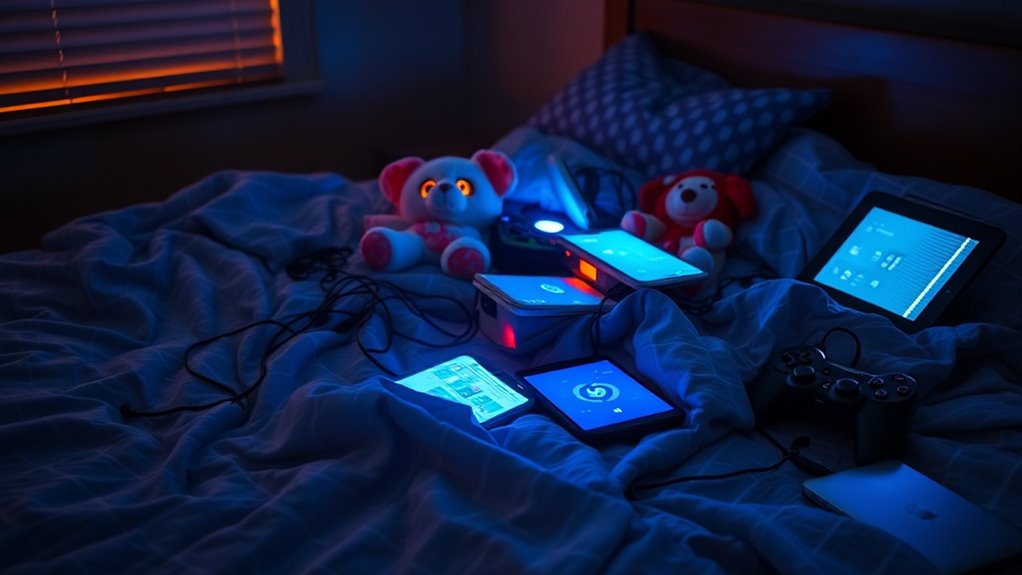
Overstimulation from digital devices can markedly disrupt the structure of REM sleep, which is essential for cognitive consolidation, emotional regulation, and overall mental health. Excessive sensory input leads to neural fatigue, impairing the brain’s ability to shift smoothly into REM stages. This disruption can cause fragmented REM cycles, reducing the restorative benefits typically gained during this phase. Sensory overload hampers the normal neural processes, delaying the onset of REM sleep and shortening its duration. Consequently, the brain’s capacity to process emotions and consolidate memories diminishes. The following factors contribute to these adverse effects:
- Increased arousal levels from digital stimuli hinder REM onset.
- Neural fatigue diminishes the brain’s ability to sustain uninterrupted REM cycles.
- Disrupted REM sleep impairs emotional regulation and cognitive functions.
Understanding these consequences emphasizes the importance of managing overstimulation to preserve REM sleep integrity and mental health.
Strategies to Minimize Overstimulation for Better Sleep
To improve sleep quality, implementing targeted strategies to reduce overstimulation before bedtime is essential. Sensory overload from bright lights, loud noises, or screens can heighten emotional arousal, making it harder to relax. To minimize this, establish a calming pre-sleep routine that limits exposure to stimulating stimuli—dim the lights, turn off electronic devices at least an hour before bed, and opt for soothing activities like reading or gentle stretching. Creating a sleep-conducive environment—cool, dark, and quiet—further reduces sensory input. Mindfulness and relaxation techniques, such as deep breathing or meditation, can help regulate emotional arousal, preventing it from escalating into overstimulation. Additionally, managing daily stressors through regular physical activity and journaling can decrease baseline emotional arousal, easing the *shift* to sleep. By consciously reducing sensory overload and emotional arousal, you create a more restful environment conducive to restorative sleep.
Common Questions
Can Overstimulation Cause Long-Term Sleep Disorders?
Overstimulation can contribute to long-term sleep disorders by causing neurotransmitter imbalances and disrupting sensory processing. Persistent overstimulation may lead to heightened arousal and difficulty calming your mind, impairing your sleep regulation. Over time, this can establish patterns that hinder restful sleep, potentially evolving into chronic conditions. Evidence suggests that managing sensory input and restoring neurotransmitter balance are essential for improving sleep quality and preventing long-term sleep disturbances.
How Does Overstimulation Affect Sleep Quality in Children?
You may notice that overstimulation causes poor sleep quality in children through sensory overload, which heightens their alertness and makes it difficult to wind down. Behavioral triggers, like increased activity or emotional excitement, can also interfere with bedtime routines. Research shows that excessive sensory input and reactive behaviors disrupt circadian rhythms, leading to difficulty falling asleep and fragmented sleep, ultimately impairing overall rest and recovery.
Are Certain Types of Overstimulation More Harmful Than Others?
Certain types of overstimulation, like sensory overload, are more harmful because they considerably increase emotional fatigue, which disrupts sleep more deeply. Studies show that sensory overload, such as loud noises or bright lights, leads to heightened stress responses, impairing melatonin release. This makes it harder to fall asleep and stay asleep. Emotional fatigue from intense stimulation can also prolong sleep latency, reducing sleep quality overall.
What Are the Signs of Overstimulation Before Sleep?
You might notice signs of overstimulation before sleep, such as sensory overload—feeling overwhelmed by sights, sounds, or tactile input—and hyperarousal symptoms like racing thoughts, increased heart rate, or difficulty relaxing. These indicators suggest your nervous system is overstimulated, making it harder to shift into restful sleep. Recognizing these signs allows you to implement calming routines, reducing overstimulation and improving sleep quality through targeted relaxation strategies.
Can Natural Remedies Help Counteract Overstimulation’s Effects on Sleep?
Yes, natural remedies like melatonin supplements and herbal teas can help counteract overstimulation’s effects on sleep. Melatonin, a hormone, regulates sleep-wake cycles and may improve sleep onset disrupted by overstimulation. Herbal teas such as chamomile or valerian contain calming compounds that promote relaxation. Evidence suggests these remedies can be effective adjuncts, but individual responses vary. Always consult a healthcare professional before starting new supplements or teas for sleep issues.